You are relaxing at home when a faint, sulfur-like scent of rotten eggs drifts into the room. It's a moment that immediately stops your heart. If you smell gas in house plumber experts are the solution for repairs, but the immediate fear of what to do next can be paralyzing. We know how overwhelming this feels. You're likely balancing the fear of a potential fire with the confusion of whether to call the utility company or a repair service first. It's a stressful situation, but it doesn't have to be a catastrophe.
We agree that your peace of mind is the top priority. That's why this guide is designed to de-escalate the tension and provide a clear, step-by-step path forward. You'll learn the immediate actions to take to secure your home and why a professional plumber is your best partner for a permanent, honest repair. We'll walk through how to identify the source of the leak, the role of the 2025 California Plumbing Code in your safety, and what to expect when a veteran-owned specialist arrives to fix the problem. By the end of this article, you'll have a plan that prioritizes integrity and gets your household back to its normal, safe routine.
Key Takeaways
- Prioritize immediate safety by evacuating all people and pets and avoiding any electrical switches that could spark.
- Understand why a smell gas in house plumber is necessary to repair your lines after the utility company secures the area.
- Identify how local factors like seismic shifting and pipe corrosion in older homes contribute to hidden gas leaks.
- Learn about the professional diagnostic tools, including pressure tests and electronic sensors, used to pinpoint leaks accurately.
- Discover simple maintenance steps and modern connector upgrades that can prevent future gas emergencies in your home.
Smelling Gas in Your Yucaipa House? Immediate Safety Steps
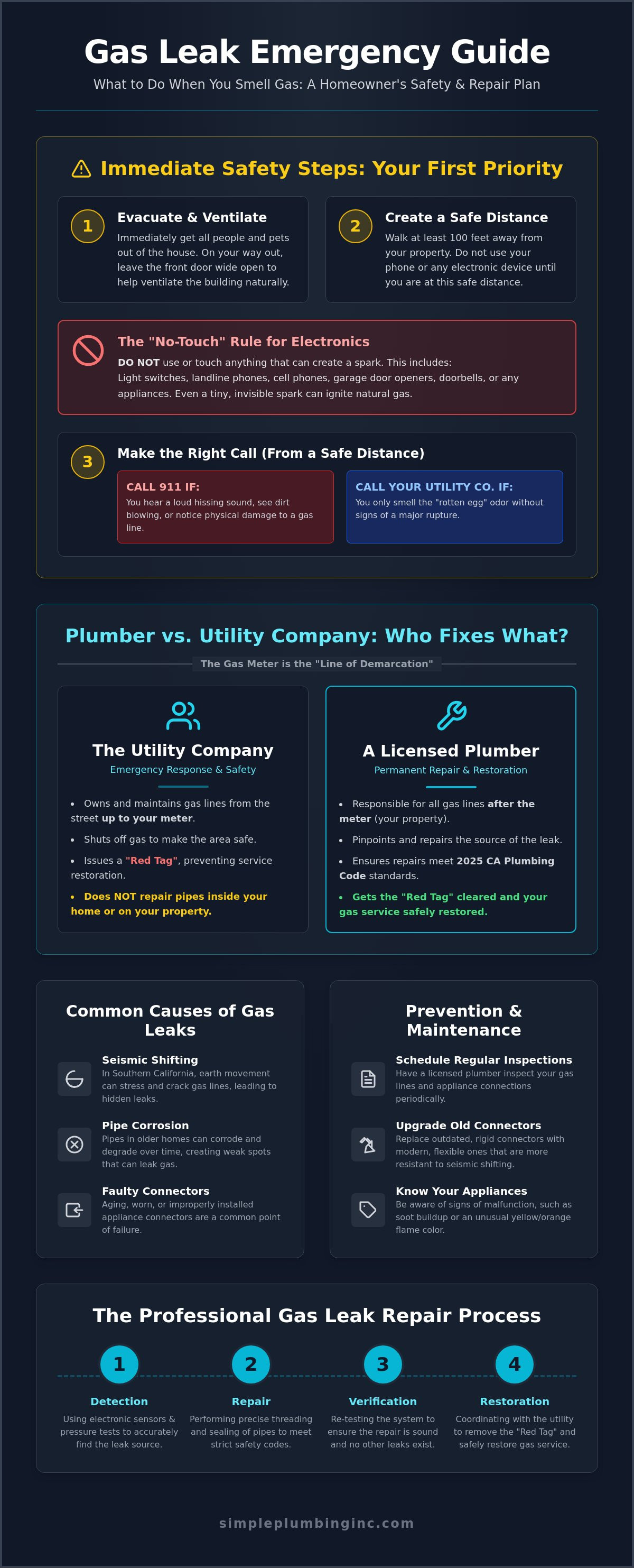
If that distinct rotten egg smell hits you, stop everything. Don't look for the source. Don't try to shut off the stove or investigate the water heater. Your only job is to get every person and pet out of the building immediately. Natural gas is highly combustible, and your safety is the only thing that matters in this moment. When you exit, leave the front door wide open. This simple step helps ventilate the space naturally without you having to stay inside a second longer than necessary.
Walk at least 100 feet away from your property before you even reach for your phone. It's tempting to call for help while standing in the kitchen, but you need to be at a safe distance. While you'll eventually need a smell gas in house plumber to fix the underlying issue, the immediate goal is physical safety. Don't stop to grab valuables or change your shoes. Just get out.
The "No-Touch" Rule for Electronics
This is the most critical rule: do not touch anything electrical. Even a tiny spark from a light switch or a digital thermostat can trigger a combustion event if the gas concentration is high enough. You should also avoid using garage door openers, doorbells, or landline telephones. These devices create small internal arcs that are invisible to the eye but dangerous in a gas-filled room. For more detailed Gas leak safety information, experts emphasize that even the small amount of energy used to power a cell phone can be a risk factor if you're standing directly in the leak. Wait until you're down the street to make your calls.
When to Call 911 vs. the Gas Company
Once you're at a safe distance, you need to make two calls. Call 911 immediately if you hear a loud hissing sound, see dirt blowing in the air, or notice physical damage to a gas line. These are signs of a major rupture. If you only smell the odor, call SoCalGas or your local utility provider. They have the tools to detect the concentration levels and will likely shut off the gas at the meter to secure the structure.
The utility company's job is to make the area safe, not to fix your pipes. They'll often "red tag" your system, which means the gas stays off until a professional repair is made. To get your gas turned back on and your home running again, you'll need a licensed smell gas in house plumber. They'll find the leak, repair it, and ensure the work meets the 2025 California Plumbing Code standards so you can pass inspection and restore your service.
Plumber vs. Utility Company: Who Should You Call for Gas Leaks?
When you smell gas in house plumber services are often the last thing on your mind, but they're your most important partner for a permanent fix. There is often confusion about who is responsible for what. Think of your gas meter as a border. This is the "Line of Demarcation." The utility company, such as SoCalGas, owns and maintains everything from the street up to that meter. However, once the gas passes through the meter and enters the pipes leading into your home, that infrastructure belongs to you. This includes all the piping in your walls, under your floors, and the connectors for your appliances.
If a utility technician finds a leak on your side of the meter, they'll shut off the gas supply immediately. They will then issue a "red tag." This notice is a safety protocol that prevents the gas from being turned back on until the leak is professionally repaired. It's a frustrating experience to be left without heat or hot water, but the utility company is not allowed to work on your private piping. For more Natural gas safety tips, industry experts emphasize that this division of labor ensures that specialized professionals handle the complex task of interior pipe repair.
What the Gas Company Does (and Doesn’t) Do
Utility technicians are essentially emergency responders. Their primary goal is to secure the area and stop the flow of gas if a hazard exists. They have high-tech equipment to find leaks, but their service ends at the meter. They don't repair house piping, they don't fix water heaters, and they don't troubleshoot stove connections. If they find a problem, they'll lock the meter and leave you with a list of requirements that must be met before they'll restore your service.
Why a Licensed Plumber is Essential for Repairs
Repairing a gas line is a precision job that requires specific training in threading, sealing, and pressure testing. A licensed plumber understands the 2025 California Plumbing Code and ensures your home meets every legal safety standard. At Simple Plumbing Inc, we take a disciplined, veteran-owned approach to these repairs. We focus on transparent communication so you know exactly what went wrong and how we fixed it. Our team also coordinates with local inspectors to verify the repair, providing the utility company with the documentation they need to unlock your meter. If you're dealing with a red tag, our team can provide a reliable gas leak inspection to get your home back to normal quickly.
- Expertise: Plumbers use specialized compounds and pressure gauges to ensure a gas-tight seal.
- Integrity: As a veteran-owned business, Simple Plumbing Inc provides honest assessments without high-pressure sales.
- Compliance: We ensure all repairs meet the latest safety codes to prevent future red tags.
Common Causes of Gas Leaks in Southern California Homes
Gas leaks in our region aren't always the result of a single, dramatic event. More often, they are the quiet consequence of our environment and the natural aging of home infrastructure. We live in an area where the ground is rarely completely still. This constant, subtle movement puts stress on the rigid piping systems that were standard in older construction. If you smell gas in house plumber experts should be called to investigate these common Southern California culprits before a small leak becomes a larger safety concern.
Age is another significant factor, especially in the heritage homes found throughout Yucaipa. Many of these properties still rely on original galvanized steel pipes. Over decades, moisture and soil chemistry can cause these pipes to corrode from the outside in. This corrosion eventually thins the pipe walls until pinhole leaks develop. A smell gas in house plumber can identify if your leak is a simple fix or a sign of systemic pipe failure that requires more extensive work.
Earthquakes and Soil Shifting
Minor tremors are a fact of life in the Inland Empire. While we may not feel every small shake, your gas lines do. Rigid iron pipes don't have the flexibility to move with the soil, which can lead to loosened joints or cracked fittings over time. This is why many homeowners are now opting for seismic shut-off valves. These devices automatically cut the gas supply during a significant earthquake, providing an extra layer of protection when you need it most. Yucaipa’s proximity to the San Andreas fault and its varied hillside terrain make routine gas line inspections a vital safeguard for local property owners.
Appliance Wear and Improper Hookups
The most frequent leak points in a home are where appliances connect to the main gas supply. Water heaters, furnaces, and kitchen ranges are common offenders. Often, a leak is caused by a DIY installation where the installer relied on "hand-tightening" rather than using the correct tools and sealant. This is a major safety risk. Professional standards for natural gas safety require specific torque and specialized thread compounds to ensure a permanent seal.
We also see many leaks caused by old, degraded "pigtail" connectors. These are the flexible lines that run from the wall to your appliance. If you are considering a water heater replacement Yucaipa specialists will always recommend replacing these connectors. Older brass or uncoated copper lines can become brittle and crack if the appliance is moved for cleaning or service. Modern, coated stainless steel connectors are now the standard because they offer much better resistance to corrosion and physical damage.
The Professional Gas Leak Detection and Repair Process
When you smell gas in house plumber specialists don't just walk around sniffing the air. We arrive with a disciplined, step-by-step protocol to isolate the problem and prove the system is safe before we leave. We move from broad diagnostics to pinpoint accuracy, ensuring no stone is left unturned. This methodical approach is the only way to provide the transparency and safety you deserve during a stressful home emergency.
- Step 1: The Pressure Test. We start by shutting off the gas at the meter and appliances. We then pump a small amount of air into the system and monitor a high-sensitivity gauge. If the pressure drops, we have confirmed there is a leak somewhere in the lines.
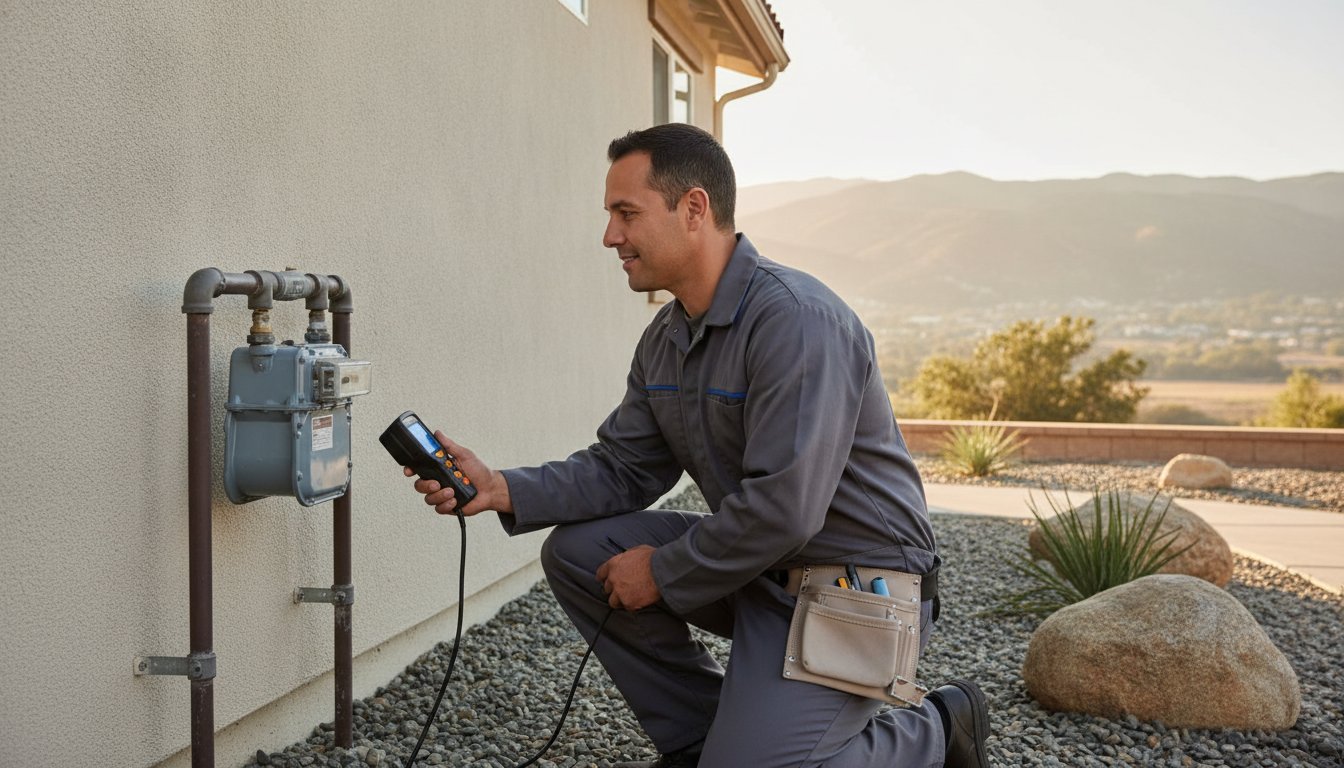
- Step 2: Electronic "Sniffing." Once we know a leak exists, we use handheld electronic sensors. These devices are designed to detect combustible gases at the parts-per-million level, allowing us to trace the lines behind walls or under floors to find the exact source.
- Step 3: Bubble Testing. This is a classic, foolproof method. We apply a specialized non-corrosive solution to joints and fittings. If bubbles begin to grow, we have visual confirmation of the leak's location.
- Step 4: The Fix. Depending on our findings, we may replace a corroded fitting, install a new section of pipe, or swap out a faulty appliance valve. Every repair is done using materials that meet the 2025 California Plumbing Code.
Advanced Leak Detection Technology
We rely on electronic combustible gas indicators because they catch what the human nose misses. These tools can distinguish between a minor "nuisance" smell, like a pilot light that blew out, and a structural pipe failure that poses a real danger. This precision is part of our broader leak detection Yucaipa CA services, where we use technology to protect your home's foundation and your family's health. We believe in showing you the data so you can make informed decisions about your repairs.
Testing and Certification for Service Restoration
The job isn't done just because the pipe is fixed. We perform a final, rigorous pressure test to ensure the entire system is 100% airtight. After we're satisfied, we provide a clear, written explanation of the work performed. This documentation is vital for the "Green Tag" process. In Yucaipa, the city inspector must sign off on the repair before the utility company will unlock your meter. We help you navigate this paperwork to get your heat and hot water back on as quickly as possible. If you need a partner you can trust, schedule a gas line inspection with our veteran-owned team today.
Preventing Gas Leaks: Maintenance Tips for Homeowners
The best way to handle a gas emergency is to prevent it from ever happening. While you never want to be in a position where you have to call a smell gas in house plumber for an urgent repair, proactive care can keep that scenario at bay. Maintenance isn't just about checking boxes. It is about creating a predictable, safe environment for your family. By following a few simple steps, you can significantly reduce the risk of leaks and ensure your home's gas system remains in peak condition for years to come.
- Schedule annual inspections: Have a professional check your gas lines every year. This is easy to do during your regular water heater maintenance visit.
- Upgrade your connectors: Replace old brass or uncoated copper flex lines with modern, coated stainless steel connectors. These are much more resistant to corrosion and physical stress.
- Clear the meter area: Keep the space around your outdoor gas meter free of overgrown vegetation, debris, or heavy storage items. Technicians need easy access, and clear space prevents accidental damage to the regulator.
- Install detectors: Place combustible gas and carbon monoxide detectors on every level of your home, especially near sleeping areas and gas-burning appliances.
The Importance of Routine Inspections
A veteran-owned plumber brings a specific level of discipline and an eye for detail to every inspection. We look for "pre-leaks," which are small signs of wear, such as surface corrosion or slightly loose fittings, that haven't failed yet but will soon. Sometimes, homeowners ask us, why is my water pressure low, and the answer often reveals general pipe health issues that affect both water and gas lines. If your water pipes are corroding due to age or soil conditions, your gas lines may be facing the same hidden threats. Investing in proactive maintenance typically saves homeowners thousands of dollars by avoiding the high costs of emergency repairs and city-mandated inspections.
Upgrading Your Safety Infrastructure
Technology has made it much easier to monitor your home's safety. Modern smart gas detectors can now send alerts directly to your smartphone, giving you an early warning even if you aren't home. This is a great addition to any safety plan. However, technology can't fix old infrastructure. If your Yucaipa home is over 50 years old and still has its original gas lines, it may be time to consider a full repipe. Older galvanized pipes have a finite lifespan, and replacing them now prevents the stress of a sudden failure later. If you have concerns about the age or condition of your system, contact Simple Plumbing Inc for a safety inspection today. We provide honest, straightforward answers to help you protect your home.
Protect Your Home and Restore Your Peace of Mind
Dealing with a gas leak is undeniably stressful, but you don't have to navigate it alone. By prioritizing immediate evacuation and understanding the clear line between utility safety and professional repair, you've already taken the most important steps toward securing your household. When you smell gas in house plumber experts are your best resource to ensure the job is done right the first time; meeting all safety codes and passing city inspections without delay.
Simple Plumbing Inc has been serving Yucaipa and the Inland Empire since 2023 with a commitment to integrity and clear communication. As a veteran-owned and operated business, we bring a disciplined approach to every service call. We use expert gas leak detection technology to find hidden issues quickly, providing you with honest answers and straightforward solutions. We're here to help you move past the "red tag" and get your home back to its normal, comfortable state.
Get Expert Gas Leak Repair from Simple Plumbing Inc
Take a deep breath and trust the process. With the right partner by your side, your home will be safe and your gas service will be restored before you know it.
Frequently Asked Questions
What does a gas leak actually smell like?
Natural gas is naturally odorless, so utility companies add a chemical called mercaptan to give it a distinct, unpleasant scent. Most people describe it as smelling like rotten eggs or sulfur. This additive is a safety requirement designed to help you detect even small leaks before they become dangerous. If you catch this scent, don't wait to see if it goes away on its own.
Is it normal to smell a little gas when I turn on my stove?
It's normal to smell a very faint, brief whiff of gas as the burner ignites. This happens because a small amount of gas escapes before the pilot or electronic spark catches. However, the smell should disappear immediately once the flame is steady. If the odor lingers while you're cooking, or if you smell it when the stove is off, you likely have a leak.
Can a plumber fix a gas leak, or do I need a specialist?
A licensed plumber is exactly who you need for gas line repairs. While some people look for "gas specialists," professional plumbers are trained in the specific threading and sealing techniques required for gas-tight systems. When you smell gas in house plumber teams use electronic sensors to find the source. They ensure every repair meets the 2025 California Plumbing Code for your long-term safety.
How much does it typically cost to repair a gas leak in Yucaipa?
Repair costs in Yucaipa vary based on the location of the leak and the material of your pipes. A simple connector replacement is different from repairing a line buried behind a wall. While we don't provide flat estimates over the phone, we believe in transparent, honest communication. We'll give you a clear explanation of the repair needs and the costs after our initial diagnostic test.
What happens if the gas company red-tags my house?
A red tag is a formal notice that your gas system is unsafe. The utility company locks your meter and won't restore service until the issue is resolved. To get the gas back on, you need a professional to perform the repair. When you smell gas in house plumber specialists are the ones who can legally fix the line and help you get the required city inspections.
Is a gas leak an emergency if I only smell it occasionally?
Yes, any gas odor is an emergency. Even if you only smell it occasionally, it indicates a leak that could worsen at any time. Gas can accumulate in pockets within your walls or attic, creating a hazard you can't always see. It's always better to be safe and have a professional perform a pressure test to confirm your home's integrity.
Will my homeowners insurance cover gas line repairs?
Most homeowners insurance policies don't cover gas line repairs caused by standard wear and tear or corrosion. These are typically considered maintenance responsibilities. However, if the damage was caused by a sudden, covered peril like a fire or a fallen tree, your policy might help. It's always a good idea to review your specific coverage and limits with your insurance agent.
Can I stay in my house if I smell gas in just one room?
No, you shouldn't stay in the house if you smell gas anywhere. Gas is highly mobile and can travel through floorboards, electrical outlets, and ventilation systems. Just because you only smell it in one room doesn't mean the concentration isn't rising elsewhere. Your priority should be getting everyone out of the structure and calling for professional help from a safe distance.


