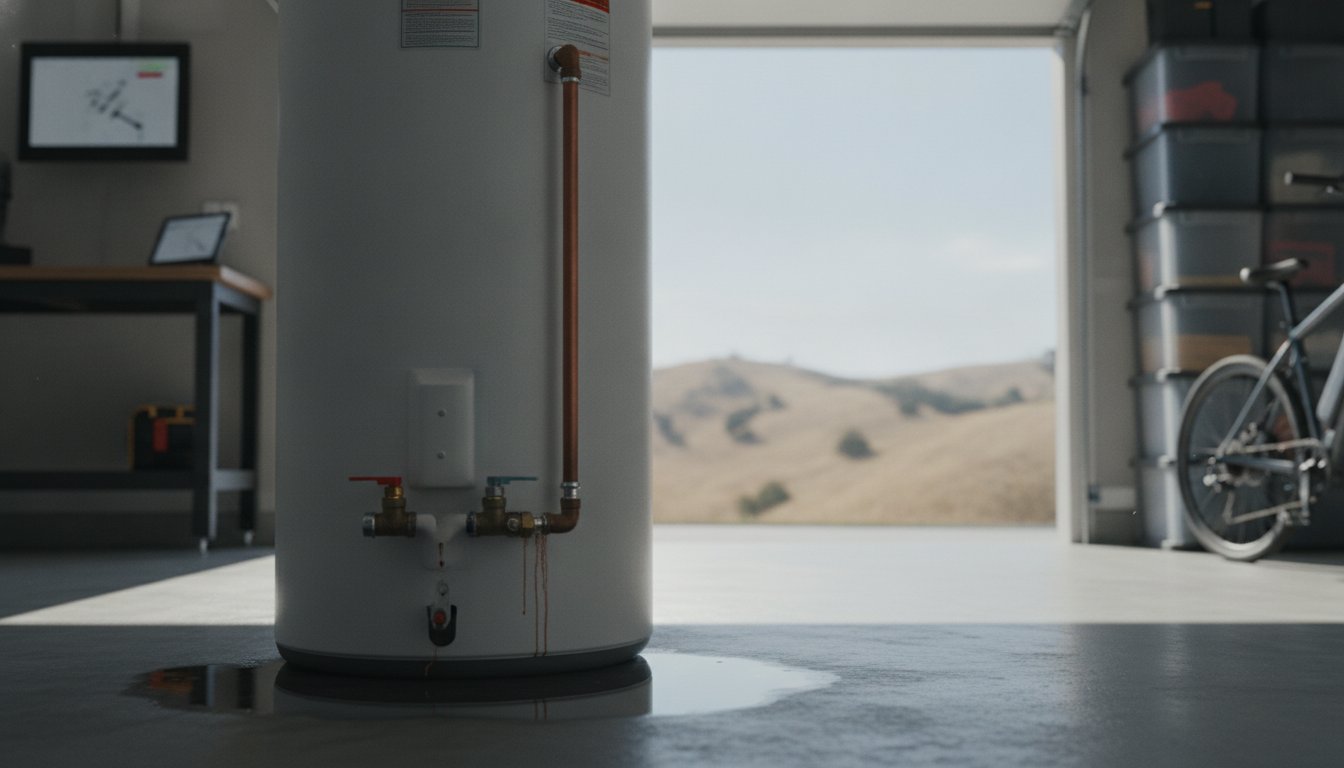
Imagine walking into your garage on a Tuesday morning only to find two inches of standing water surrounding your water heater. It is a messy, stressful surprise that no Yucaipa homeowner wants to face. You likely hope your current unit has a few more years of life left, but the heavy minerals in our local hard water can quietly wear down a tank from the inside out. Knowing the common signs water heater needs replacement is the best way to stay ahead of a sudden failure before it turns into a domestic flood.
We believe in keeping home maintenance simple and transparent for our neighbors. You don't need to be a plumbing expert to know when your system is failing; you just need to know what to look for. This guide provides a clear checklist to help you decide if a repair is enough or if it is time for a new unit. We will also look at how California’s 2026 energy regulations and Yucaipa’s specific water quality affect your options, giving you the confidence to make an honest, informed decision for your home.
Key Takeaways
- Learn why Yucaipa’s unique mineral content often shortens the standard water heater lifespan to just eight years.
- Recognize the visual and audible signs water heater needs replacement, such as rust-colored water or popping sounds in the tank.
- Understand how sediment buildup traps heat and causes your shower to turn cold before you are finished.
- Apply the "50% Rule" to determine if a repair is a good value or if a full replacement is more cost-effective.
- Explore how modern efficiency standards and tankless options can lower your monthly utility costs and prevent unexpected leaks.
Age Matters: How Long Do Water Heaters Last in Yucaipa?
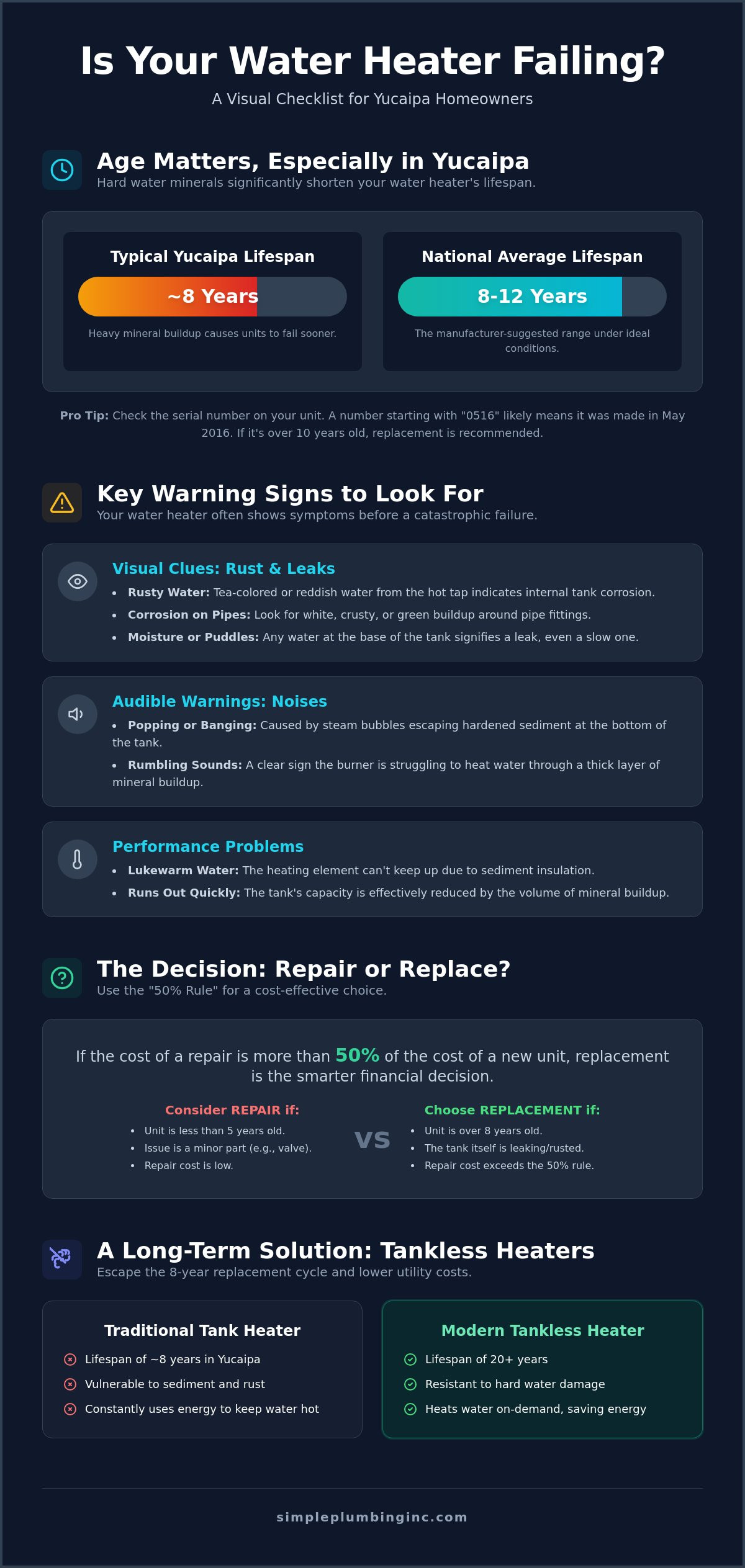
Most manufacturers suggest that traditional water heating systems should last between 8 and 12 years. This is a broad range, and many homeowners assume they have a full decade before they need to worry. However, local conditions play a massive role in that timeline. In Yucaipa, the reality is often different because of our local environment. Our water contains high levels of minerals that settle at the bottom of the tank. This sediment forces the burner to work much harder to heat the water through the buildup. This extra stress often causes units in our area to show signs water heater needs replacement closer to the 8-year mark. If your unit is approaching that milestone, it is time to take a closer look at its condition.
Finding the Manufacture Date
You can find the age of your unit by looking at the rating plate. This is the large sticker on the side of the tank, usually located near the warning labels or the thermostat. You are looking for the serial number. While every brand uses a slightly different system, many follow a simple code where the first four digits represent the month and year. For example, a serial number starting with "0516" likely means the unit was built in May 2016. If your unit is older than 10 years, it is effectively a ticking time bomb. Even if it seems to be working fine right now, the internal steel is likely thin and brittle. Knowing how long do water heaters last helps you plan for a replacement on your own terms, rather than waiting for a midnight emergency.
Why Local Lifespans Vary
The quality of our local water table directly impacts the internal health of your plumbing. Without a water softener, those minerals act like sandpaper on the tank's glass lining. Your system has a built-in protector called an anode rod. This sacrificial rod attracts corrosive elements to itself to protect the steel tank. Once that rod dissolves, the tank begins to rust from the inside out. Regular maintenance can slow this process, but Yucaipa's hard water is persistent. If you notice your hot water has a metallic smell or a slight tint, these are clear signs water heater needs replacement soon.
If you are tired of the 8-year replacement cycle, you might consider a change in technology. While a traditional tank has a limited life because it is always holding water, a tankless water heater installation in Yucaipa can often last 20 years or more. These systems do not store water, which makes them far less prone to the rust and sediment issues that plague standard tanks in our area.
The Visual Checklist: Rust, Corrosion, and Moisture
Visual inspections are your first line of defense against a flooded garage or basement. You don't need a plumbing license to spot the most common signs water heater needs replacement. Often, the tank will try to tell you it is failing long before it actually bursts. By taking five minutes once a month to look at your unit, you can avoid a major headache. If you turn on the hot tap and see discolored or "tea-colored" water, you should pay attention. This is a classic indicator that the internal lining of your tank is breaking down. It is helpful to cross-reference your findings with Rheem's 5 signs of a failing water heater, which highlights discolored water as a primary warning. If the rust is only coming from the hot side, it almost certainly means the heater itself is the culprit.
Testing for Tank Rust vs. Pipe Rust
To be sure about the source of the rust, perform a simple bucket test. Place a white plastic bucket under the drain valve at the bottom of the tank and let a few gallons flow out. If the water in the bucket looks clear but the hot water from your faucets looks rusty, your pipes might be the issue. However, if the water in the bucket is murky or filled with reddish flakes, the tank's interior is corroding. It is a hard truth of plumbing that internal tank rust cannot be repaired, only replaced.
Identifying "Slow" Leaks
Not all leaks start with a spray of water. Most begin as slow, silent drips that evaporate before you notice them. Look for a white, powdery "crust" or green corrosion around the inlet and outlet pipes. This buildup usually means a gasket or fitting is failing. You should also check the Temperature and Pressure (T&P) relief valve on the side or top. If it is constantly dripping, it might be struggling with thermal expansion. In a closed plumbing system, water has nowhere to go as it heats up, which puts immense pressure on your unit's seals. If you find persistent moisture or small puddles at the base of the heater, it is time for a professional leak detection service to see if the tank itself has a structural breach.
A "sweating" tank is another subtle warning. If the exterior of the heater feels damp or looks like it is covered in dew, it often points to a microscopic fracture in the internal tank. As the metal expands and contracts with heat, these tiny cracks allow moisture to seep through to the insulation. This moisture eventually works its way to the outer shell. These visual signs water heater needs replacement are the unit’s way of giving you a head start on a solution before the situation becomes an emergency.
Audible Warnings: Rumbling, Popping, and Banging
Have you ever noticed your water heater making a sound like it is popping popcorn or cooking a heavy meal? These audible cues are among the most reliable signs water heater needs replacement. While it might seem like a minor annoyance, those rumbles and bangs are actually the sounds of your system struggling to survive. In Yucaipa, our hard water is the primary culprit behind these noises. When the unit starts shouting, it is usually telling you that its internal components are reaching their breaking point.
The Sound of Sediment
Over time, the minerals in our local water supply settle at the bottom of your tank. This creates a thick, rocky layer of scale that covers the heating elements or the bottom of the tank. This scale acts as an insulator. It forces the burner to work twice as hard to heat the water through a layer of rock. Kettling is the technical term for the sound of steam bubbles trapped beneath these sediment layers as they violently escape into the main tank. This popping sound means your water is essentially boiling at the bottom of the tank before it ever reaches your shower.
When Noise Signals Total Failure
Once you hear loud cracks or bangs, the damage is often structural. The sediment causes the bottom of the tank to overheat, which makes the steel expand and contract more than it was ever designed to. This constant cycle of extreme heat and cooling causes the metal to fatigue. Eventually, the steel will crack. You will likely notice your energy bills rising during this time. The unit has to run much longer to overcome the mineral barrier, wasting gas or electricity every single day.
Many homeowners ask if they can simply flush the tank to stop the noise. While regular maintenance is vital, flushing often comes too late once the banging has become a regular occurrence. In many cases, the sediment has already hardened into a solid, coral-like mass that a standard flush cannot remove. Ignoring these sounds is a gamble. A tank that is constantly overheating and fatiguing is much more likely to suffer a sudden, catastrophic burst. Paying attention to these signs water heater needs replacement can save you from a major flood and the high costs of emergency cleanup.
Performance Issues: Lukewarm Water and Slow Recovery
There is nothing quite as jarring as a shower that starts out steaming hot but turns icy cold within minutes. While some generic guides suggest simply bumping up your thermostat, this often masks a much deeper problem. If your household is suddenly running out of hot water faster than it used to, you are likely seeing one of the most common signs water heater needs replacement. This loss of capacity usually means your tank is no longer able to hold its rated volume of hot water, or it can't heat the incoming cold water fast enough to keep up with your demand.
One common culprit for this "sudden cold" phenomenon is a broken dip tube. This plastic pipe is designed to send cold water to the very bottom of the tank so it can be heated. When it cracks or disintegrates, cold water stays at the top of the tank and mixes directly with the hot water exiting through your faucet. You end up with lukewarm water that never seems to get hot enough. Because dip tubes are internal components, their failure often signals that the rest of the tank’s materials are also reaching the end of their functional life.
Testing Your Recovery Time
Recovery time is the amount of time your unit takes to reheat the entire tank after a large draw, such as a load of laundry or a long bath. For a standard 40-gallon gas tank, you should expect a full recovery in about 30 to 45 minutes. Electric units may take a bit longer, usually closer to an hour. If you find yourself waiting two or three hours before you can take the next shower, your heating elements or burners are likely failing. When your system struggles to this degree, a professional water heater replacement in Yucaipa is usually the most reliable way to restore comfort to your home.
The Hard Water Connection
Yucaipa’s specific water quality plays a major role in these performance drops. In the Inland Empire, mineral scale builds up on heating elements like a thick layer of concrete. In an electric heater, this scale prevents the element from actually touching the water, making it incredibly inefficient. In gas units, the scale sits at the bottom of the tank, acting as a thermal barrier between the flame and the water. This is why slow recovery is such a frequent precursor to total failure in our area. Once you replace your failing unit, installing a water softener can protect your new investment from suffering the same mineral-related fate. If you are tired of lukewarm showers and high utility bills, it is time to consider a modern, high-efficiency water heater replacement to get your home back on track.
The Decision: Should You Repair or Replace?
Deciding whether to fix your current unit or buy a new one can feel like a gamble. You want to be sure you aren't throwing good money after a bad tank. A helpful guideline we share with our neighbors is the 50% Rule. If the cost to repair your heater is more than half the price of a new unit, it is usually smarter to invest in the upgrade. This is especially true if you've already noticed multiple signs water heater needs replacement, such as advanced age combined with sediment noise. Investing in a new system often pays for itself through lower utility bills and the peace of mind that comes with a fresh warranty.
For many Yucaipa homeowners, the long-term value of a tankless water heater installation in Yucaipa is worth the initial investment. These systems provide an endless supply of hot water and can last twice as long as a traditional tank. However, if you prefer a standard tank, modern high-efficiency models are still a massive improvement over units built a decade ago. We always prioritize your safety above all else. If your tank is leaking from the bottom or if you suspect a gas leak, the unit must be replaced. These are structural and safety failures that cannot be safely patched or repaired.
When Repair Makes Sense
There are times when a simple fix is the right choice. If your unit is under 6 years old, it is likely still covered by a manufacturer warranty. In these cases, replacing a heating element or a thermocouple is a straightforward task that can buy you several more years of service. If the tank itself is structurally sound and shows no signs of rust or moisture at the base, we will always tell you. Minor issues with external components, like a faulty pilot light or a dripping T&P valve, are often affordable to resolve without the need for a full replacement.
The Veteran-Owned Advantage
At Simple Plumbing Inc, we take a "no fluff" approach to evaluating your home's plumbing. We know that an unexpected home repair is stressful, so we provide honest, clear answers without the high-pressure sales tactics. As a veteran-owned business, we believe in integrity and straightforward communication. We want to help you understand the specific signs water heater needs replacement so you can make the best choice for your family and your budget. Our goal is to be the steady, experienced voice you can trust when your home's comfort is on the line. If you are tired of lukewarm showers or are worried about a potential leak, we are here to help. Contact Simple Plumbing Inc for a straightforward water heater evaluation and get an honest assessment of your system's health today.
Secure Your Home’s Hot Water Today
Identifying the early signs water heater needs replacement is the best way to avoid a messy and expensive emergency. By monitoring your unit’s age and watching for visual cues like rust or moisture, you can take control of your home’s maintenance. Yucaipa’s hard water puts a unique strain on your plumbing, making it important to act when you hear rumbling or notice a drop in performance. You now have a clear framework to decide between a simple repair and a long-term upgrade that fits your budget.
Our veteran-owned and operated team is here to provide the honest, local expertise you deserve. We specialize in Yucaipa hard water solutions and offer expert leak detection to give you a clear picture of your system’s health. We believe in straightforward service without any hidden agendas or high-pressure tactics. Get a Straightforward Water Heater Quote from Our Veteran-Owned Team and let us help you restore safety and comfort to your household. Taking these small steps today will keep your home running smoothly and your garage dry for years to come.
Frequently Asked Questions
Is it worth fixing a 10-year-old water heater?
It is usually not worth fixing a unit that has reached the decade mark. Most standard tanks have a lifespan of 8 to 12 years. By age 10, the internal steel is often thin and prone to sudden leaks. If a repair costs more than half the price of a new unit, investing in a replacement is the safer, more cost-effective choice for your home.
What is the most common sign of a failing water heater?
One of the most frequent signs water heater needs replacement is a sudden drop in hot water temperature or volume. You might notice your showers getting shorter or the water never reaching a comfortable heat. This often happens because sediment has coated the heating elements or the internal dip tube has broken down. Discolored, rusty water is another major warning that shouldn't be ignored.
Can a water heater explode if it is making a banging noise?
While a water heater is very unlikely to explode, a banging noise is a serious warning sign. This sound, known as kettling, happens when steam bubbles are trapped under layers of mineral sediment. While the tank itself won't typically explode unless the safety valves are also broken, the constant overheating will eventually cause the steel tank to crack and leak.
How much does it cost to replace a water heater in Yucaipa?
The total cost for a new installation depends on the type of unit you choose and the specific requirements of your home. Factors like earthquake strapping, new venting, and city permits in Yucaipa will influence the final investment. Modern high-efficiency models and tankless systems often have higher upfront costs but provide significant savings on your monthly energy bills over time.
Will a leaking water heater stop on its own?
A leaking water heater will never fix itself and will only get worse over time. Most leaks start as small drips from a corroded tank or a failing valve. If you notice these signs water heater needs replacement, you should act quickly. If the leak is coming from the bottom of the tank, it indicates a structural failure that cannot be repaired.
Does hard water really shorten my water heater’s life?
Hard water is the leading cause of early failure for water heaters in Yucaipa. The minerals in our local water settle at the bottom of the tank and form a hard crust called scale. This scale makes the unit work harder, which leads to overheating and metal fatigue. Installing a water softener alongside your new unit can help double its expected lifespan.
Should I switch to a tankless water heater if my old tank fails?
Switching to a tankless system is a great option if you want endless hot water and a longer equipment life. Traditional tanks usually last about a decade, while tankless models can last 20 years or more with proper care. While the initial setup is more involved, the space savings and energy efficiency make them a popular choice for modern Yucaipa households.
Can I replace a water heater myself or do I need a pro?
You should always hire a licensed professional to handle a water heater installation. In Yucaipa, local codes require specific earthquake strapping and proper venting to ensure your home stays safe and passes inspection. Working with gas lines and high-voltage electricity is dangerous for an amateur. A pro ensures the job is done right the first time without risking a gas leak.


