
What if that slow-draining sink isn't just a simple hair clog, but a warning sign from the ground beneath your home? It is easy to feel overwhelmed when you start noticing foul odors or strange gurgling sounds in your pipes. Most homeowners immediately worry about massive repair bills or get frustrated by conflicting advice from different professionals. Figuring out how to know if sewer line is broken shouldn't feel like a guessing game that puts your budget at risk.
We understand that your home is your sanctuary, and a plumbing crisis can quickly disrupt your peace of mind. You deserve clear, honest answers without high-pressure sales tactics. We want to help you distinguish between a simple blockage and a serious structural failure. This guide will walk you through the specific, often hidden signs of damage, from unusually lush patches in your lawn to subtle changes in your home's foundation. By the end of this checklist, you will have a reliable framework to assess your sewer health and feel confident about the best way to move forward.
Key Takeaways
- Learn how to identify if a drainage issue is isolated to one sink or if it signals a wider structural failure across your entire home.
- Spot the outdoor warning signs like unusually green grass or soggy patches that indicate a leak beneath your yard.
- Discover the simple tests that help you understand how to know if sewer line is broken versus just having a standard clog that needs a snake.
- Follow a step-by-step DIY checklist to perform a "Whole-House Flush" and a "Sniff Test" to evaluate your system's health.
- Understand why a high-definition video inspection is the only way to get the full truth before deciding between traditional or trenchless repair methods.
Indoor Warning Signs: What Your Drains Are Telling You
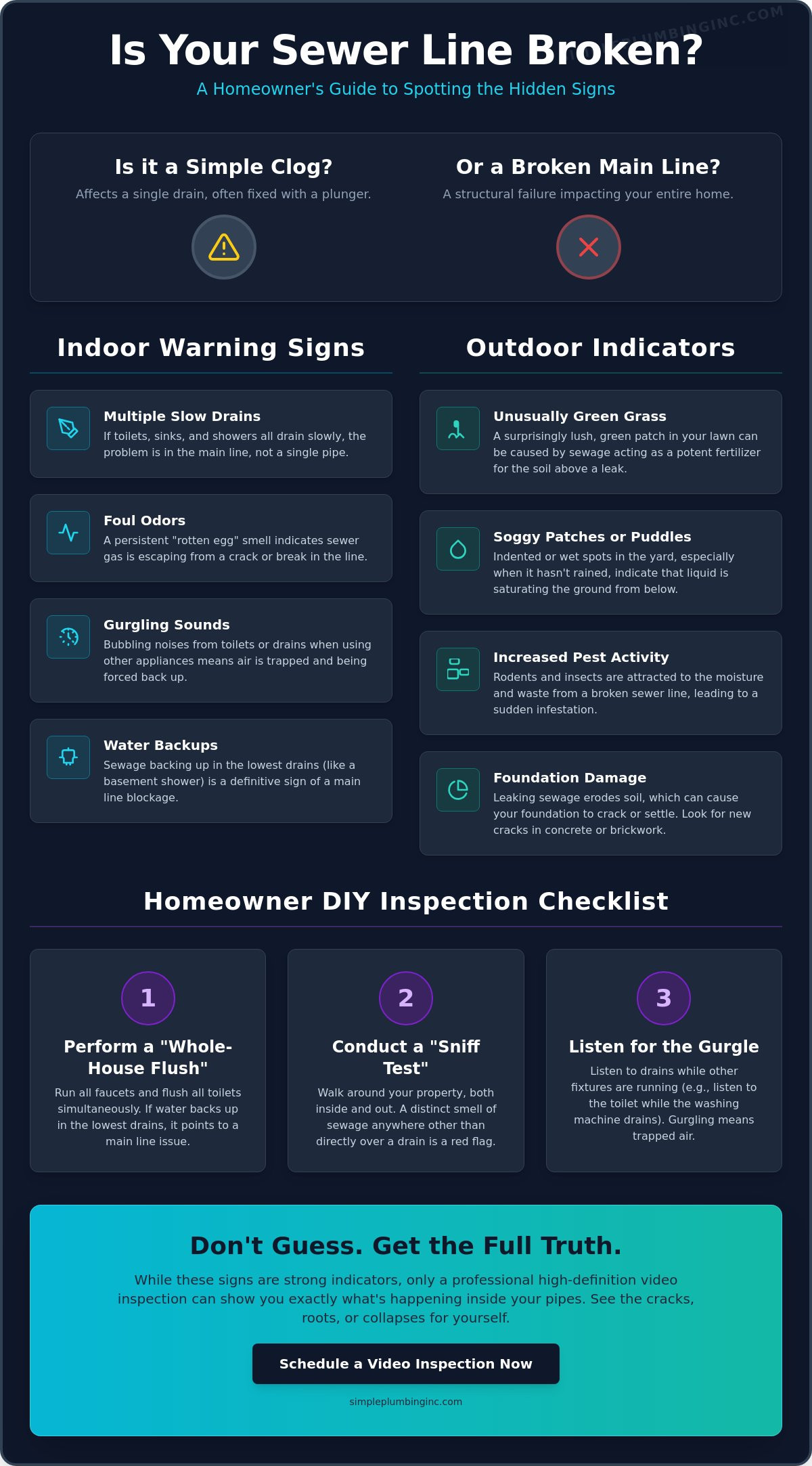
Your drains act like an early warning system for your home's plumbing. When you are trying to figure out how to know if sewer line is broken, the first step is to look for patterns. A single clogged toilet usually means a local problem. However, if every drain in your house is moving slowly, the issue is likely deeper in your system. This happens because the main line, which connects your home to the what is a sanitary sewer system, is the bottleneck for all waste. If that line is crushed or broken, nothing can leave the property efficiently.
One of the most unpleasant signs is the smell of rotten eggs. This scent is actually sewer gas, which is normally kept out of your home by water traps in your pipes. If you smell this in your laundry room or bathroom, it's a sign that the gas is bypassing those traps. It could mean a pipe has cracked or a vent is blocked. This isn't just a nuisance; it's a direct signal that the airtight integrity of your plumbing has failed somewhere behind the walls.
You should also keep an eye on your lowest drains. In most homes, these are basement showers or floor drains. If you see water or sewage backing up there while you are running the dishwasher upstairs, you have a serious problem. It means the waste has nowhere to go and is pushing back into the house through the path of least resistance. You might also notice your toilet water levels rising and falling for no reason. This erratic behavior often points to a vacuum being created by a breach in the main line. Understanding these indoor symptoms is a key part of how to know if sewer line is broken before the damage spreads.
The Gurgle Test: Auditory Warning Signs
Listen closely to your plumbing. If you hear a bubbling or gurgling sound in the toilet while your washing machine is draining, you are witnessing the gurgle test in action. This sound happens because air is trapped in the line. When a large volume of water moves through a broken or blocked pipe, the air has to escape somewhere. It often pushes back up through the nearest p-trap, causing those distinct bubbles. If you see air bubbles rising in the bathroom sink while the shower is running, it's another clear sign of a structural breach or a total blockage. These sounds are your pipes trying to breathe through an obstruction.
Persistent vs. Temporary Clogs
Think about how often you reach for the plunger. If you are clearing the same toilet every week, it's not a temporary clog. Persistent issues usually indicate that something is physically wrong with the pipe itself. Perhaps tree roots have moved in or the pipe has collapsed. Many homeowners try chemical drain cleaners, but these rarely provide more than a few days of relief if the structure is compromised. A main line clog behaves differently than a simple hair clog in the tub. It affects multiple fixtures at once and won't go away with standard DIY methods. If the "fix" never lasts, the problem isn't what's in the pipe, but the pipe itself.
Outdoor Indicators: How Your Yard Reveals Pipe Damage
While indoor symptoms are often the first to grab your attention, your yard can provide even more definitive proof. If you are wondering how to know if sewer line is broken, take a walk outside. Sewage is a potent fertilizer. If you see a patch of grass that is suddenly brighter, thicker, or faster-growing than the rest of the lawn, it's often because a pipe is leaking directly underneath. You might also find soggy spots or standing water in areas where it hasn't rained. These aren't just puddles; they are signs that liquid is escaping the system and saturating your soil.
Keep an eye out for more than just grass. A broken line often attracts pests like cockroaches or rodents who are drawn to the moisture and waste. If you notice increased activity near your cleanout, it's a red flag. Additionally, look for indentations or small "sinkholes" in your lawn or even your driveway. When a pipe fails, it can wash away the surrounding dirt, causing the ground above to settle or collapse. These physical changes in your landscape are your yard's way of telling you that something is wrong underground.
Soil Subsidence and Foundation Risks
In Southern California, our soil can be quite active. When sewage leaks into the ground, it erodes the dirt that supports your home. This can lead to soil subsidence, which puts immense pressure on your foundation. You might see new or widening cracks in the exterior concrete. Shifting earth can also cause "bellies" or sags in the line itself, where waste pools and eventually forces a break. If you suspect your yard is hiding a problem, a professional sewer line repair assessment can help you catch it before it affects your home's structural integrity.
Tree Root Intrusion: The Silent Destroyer
Tree roots are naturally drawn to moisture. Even a microscopic crack in a pipe releases enough humidity to attract them. Once they find a way in, they grow rapidly, eventually filling the pipe and causing it to burst. This is especially common with older clay pipes found in Yucaipa neighborhoods. These pipes have joints every few feet that are easy targets for thirsty roots. If you have "high-risk" trees like willows or eucalyptus within 50 feet of your main line, you should be extra vigilant. Understanding these environmental factors is a big part of how to know if sewer line is broken in our local area.
The Critical Distinction: Broken Pipe vs. Simple Blockage
Understanding the difference between a simple blockage and a structural break is essential for your long-term budget. A blockage is an obstruction inside your pipe, like a buildup of grease, hair, or "flushable" wipes. In this case, the pipe walls are still intact and strong. A break is a physical compromise of the pipe wall or a joint that has shifted out of place. This distinction is the foundation of how to know if sewer line is broken rather than just temporarily stopped up.
Many homeowners assume that if a plumber clears a drain, the problem is solved. This is a dangerous misconception. A cleared drain only means that water can pass through for now. If the pipe is cracked or collapsed, it will continue to catch debris and invite tree roots. Using high-pressure water, or hydro jetting, is a great way to clear heavy grease clogs. However, if your line is already brittle or collapsed, that intense pressure can actually worsen the damage. It might even wash away the remaining soil support, leading to a total cave-in. You must be sure of the pipe's condition before applying high-pressure solutions.
When Snaking the Drain is Not Enough
If you find yourself in a "recurring backup" cycle, your pipe is trying to tell you something. A drain snake is a useful tool, but it has limitations. It can punch a small hole through a blockage or pull out a clump of roots without ever showing you the condition of the pipe walls. The snake can easily bypass a break or a shifted joint, giving you a few weeks of relief before the problem returns. Recurring clogs almost always indicate a structural issue that a simple cable cannot fix.
The Role of Pipe Material and Age
The material of your pipes plays a massive role in their longevity. Orangeburg pipes, made of wood fibers and tar, often fail after 30 to 50 years. Clay pipes are durable but have joints every few feet that are prone to shifting and root entry. Cast iron is strong but eventually suffers from "corrosion from the inside out," creating a rough surface that catches debris and narrows the flow. If your Yucaipa home was built before 1980, there is a high chance you are dealing with original lines that have reached the end of their expected lifespan. PVC is the modern standard for a reason; it resists corrosion and root intrusion far better than older materials. Knowing your home's age is a vital step in how to know if sewer line is broken or simply wearing out.
Homeowner DIY Inspection Checklist
You don't need to be a professional plumber to spot the early signs of a system failure. By following a systematic approach, you can gather the information needed to make a smart decision for your property. This checklist provides a clear framework for how to know if sewer line is broken before you call in the experts. Start with these five steps to assess your home's health from the inside out.
- Step 1: Perform a "Whole-House Flush." Enlist a family member to help you. Simultaneously flush all toilets and run the faucets in your sinks and tubs for a minute. If the water drains slowly across the entire house or begins to backup in the lower levels, the problem is likely in your main line.
- Step 2: Conduct a "Sniff Test." Walk through your laundry room and bathrooms. Then, head outside to your exterior cleanouts. A distinct, persistent sewage odor in these areas is a strong indicator of a breach in the pipe walls.
- Step 3: Walk the Perimeter. Look closely at the ground directly above your sewer line. You are searching for new soil depressions, small sinkholes, or patches of grass that look suspiciously healthy compared to the rest of your yard.
- Step 4: Check Your Water Bill. Review your statements from the last few months for unexplained increases. If the break is located near the meter, you might be paying for water that is leaking into the ground before it even reaches your fixtures.
- Step 5: Review Maintenance Records. Look at your history. If you've had a professional drain cleaning service multiple times in the last year for the same issue, the pipe itself has likely reached its breaking point.
Documenting Your Findings
Gathering evidence is the best way to avoid unnecessary repairs and ensure you get an honest assessment. Keep a simple log of which drains are slow and under what conditions the backups occur. Note any gurgling sounds and which fixtures were running at the time. Take clear photos of soggy yard spots or foundation cracks to show your plumber. This documentation helps a professional see the progression of the problem; it turns your observations into a roadmap for an efficient resolution.
Safety Precautions During Inspection
Your safety is the most important factor in any DIY check. Never touch standing water in your yard or basement, as it can contain harmful bacteria and raw sewage. Be aware that sewer gas, specifically hydrogen sulfide, can be toxic in high concentrations. If the smell is overpowering or you feel lightheaded, leave the area immediately. There is a point where DIY checks must end for your own protection. If you've completed this checklist and still have concerns, it's time to schedule a professional sewer line inspection in Yucaipa to get a definitive answer.
Professional Solutions and Next Steps
Identifying the symptoms is the first step, but a professional assessment is what provides a final resolution. Once you have completed your initial checklist, you might still feel uncertain about the exact state of your pipes. This is normal. A high-definition camera inspection removes the guesswork from how to know if sewer line is broken by providing a real-time view of the pipe's interior. It turns your suspicions into a clear, visual record that helps you make an informed choice for your home.
When we visit your property in Yucaipa, we focus on providing a transparent, veteran-owned assessment. Our team doesn't rely on high-pressure tactics or vague explanations. We show you exactly what we see on the screen. You will understand if you are dealing with a minor root intrusion that can be cleared or a structural collapse that requires a more significant fix. Our process is designed to be steady and predictable, moving you from a state of domestic chaos to a clear plan of action.
Modern technology has changed the way we handle these repairs. In the past, every sewer issue required digging a massive trench through your yard. Today, we have options. Depending on the nature of the break, we can often utilize trenchless methods that preserve your landscaping and driveway. If the damage is localized, a spot repair might be the most cost-effective path. We prioritize solutions that are functional and efficient, respecting both your time and your property.
Why Camera Inspections are the Gold Standard
A camera inspection is the only way to see the "truth" without digging up your yard. The camera travels through the line, identifying the exact location and nature of the break, whether it is a cracked joint or a crushed section of pipe. This precision prevents unnecessary excavation and helps us target the repair exactly where it's needed. This diagnostic tool is also a vital part of professional leak detection in Yucaipa CA, ensuring your foundation remains protected from hidden water damage.
Choosing the Right Repair Path
Deciding between a spot repair and a full line replacement depends on several factors. We look at the overall age of your pipes and the specific soil conditions on your property. If the rest of the line is brittle and reaching the end of its lifespan, a full replacement is often the more honest, long-term recommendation. We act as your "straight-shooter" guide, explaining the pros and cons of each path without the fluff. If you are ready for a definitive answer, Contact Simple Plumbing Inc for a clear, honest evaluation of your sewer line.
Take Control of Your Home's Sewer Health
Dealing with drainage issues doesn't have to be a source of constant stress. By paying attention to patterns like recurring clogs or changes in your yard, you have already taken the first step in how to know if sewer line is broken. Remember that a simple drain cleaning might clear a blockage, but only a professional diagnostic can confirm the structural integrity of your pipes. You deserve to know exactly what is happening under your foundation without the fear of hidden costs or unnecessary digging.
We are here to provide the clarity you need. As a veteran-owned and operated team, we value integrity and straightforward communication above all else. We use expert sewer camera diagnostics to show you the truth of your system's condition. Our neighborly, no-pressure service ensures you feel informed and in control of your next steps. Don't let a small leak turn into a major headache. Get a Straight-Forward Sewer Assessment from Simple Plumbing Inc today. We look forward to helping you restore peace of mind to your home.
Frequently Asked Questions
Is a broken sewer line a plumbing emergency?
A broken sewer line can quickly become a plumbing emergency if raw sewage is backing up into your home or creating a sinkhole in your yard. Beyond the property damage, standing sewage carries harmful bacteria and releases toxic gases. If you notice waste pushing back through your drains, you should stop using your water and call for help immediately to protect your family's health.
Can I still use my water if my sewer line is broken?
You should avoid using your water if you suspect your sewer line is compromised. Every time you flush a toilet or run a sink, that wastewater travels directly toward the break. This can lead to sewage pooling under your yard or backing up into your lowest floor drains. It is best to wait until a professional can assess the damage and tell you if it is safe to resume normal use.
How much does a sewer camera inspection usually cost?
The cost for a professional video inspection can vary depending on the complexity of your system and the accessibility of your cleanouts. While industry averages for this diagnostic service often range from $100 to $500, the investment is worthwhile. It provides a definitive answer on how to know if sewer line is broken without the need for expensive and destructive digging in your yard.
Will my homeowners insurance cover a broken sewer line?
Most standard homeowners insurance policies do not cover sewer line repairs caused by wear and tear or tree roots. Coverage is typically limited to sudden, accidental events like a pipe bursting. You should check your specific policy for "service line coverage," which is a common add-on that helps pay for repairs to the pipes connecting your home to the city main.
How long does it take to repair or replace a sewer line?
A typical sewer line repair or replacement can take anywhere from one to three days to complete. Trenchless methods are often faster because they require less digging and restoration work. Traditional excavation may take longer if we need to remove large sections of concrete or navigate complex landscaping. We always aim to restore your service as quickly and efficiently as possible.
What is the most common cause of sewer line breaks in Yucaipa?
In Yucaipa, the most common causes of sewer failure are aging pipe materials and aggressive tree root intrusion. Many older homes in our area still have original clay or cast iron pipes that have reached the end of their lifespan. These materials are naturally more brittle and have joints that make it easy for thirsty roots to find their way inside and cause a collapse.
Can tree roots grow back after the sewer line is repaired?
Tree roots can grow back if the pipe is only cleared and not permanently repaired or replaced. Roots are persistent and will return to any source of moisture they have found before. Modern repair methods, such as pipe lining or replacing old sections with seamless PVC, create a permanent barrier that prevents roots from entering your system in the future.
What happens if I ignore a broken sewer line for too long?
Ignoring a broken sewer line will lead to more expensive and dangerous problems over time. Leaking sewage can erode the soil beneath your home, leading to foundation cracks and structural instability. You also risk mold growth and persistent odors that can lower your property value. Addressing the issue early is the best way to avoid these complications and keep your repair costs manageable.


