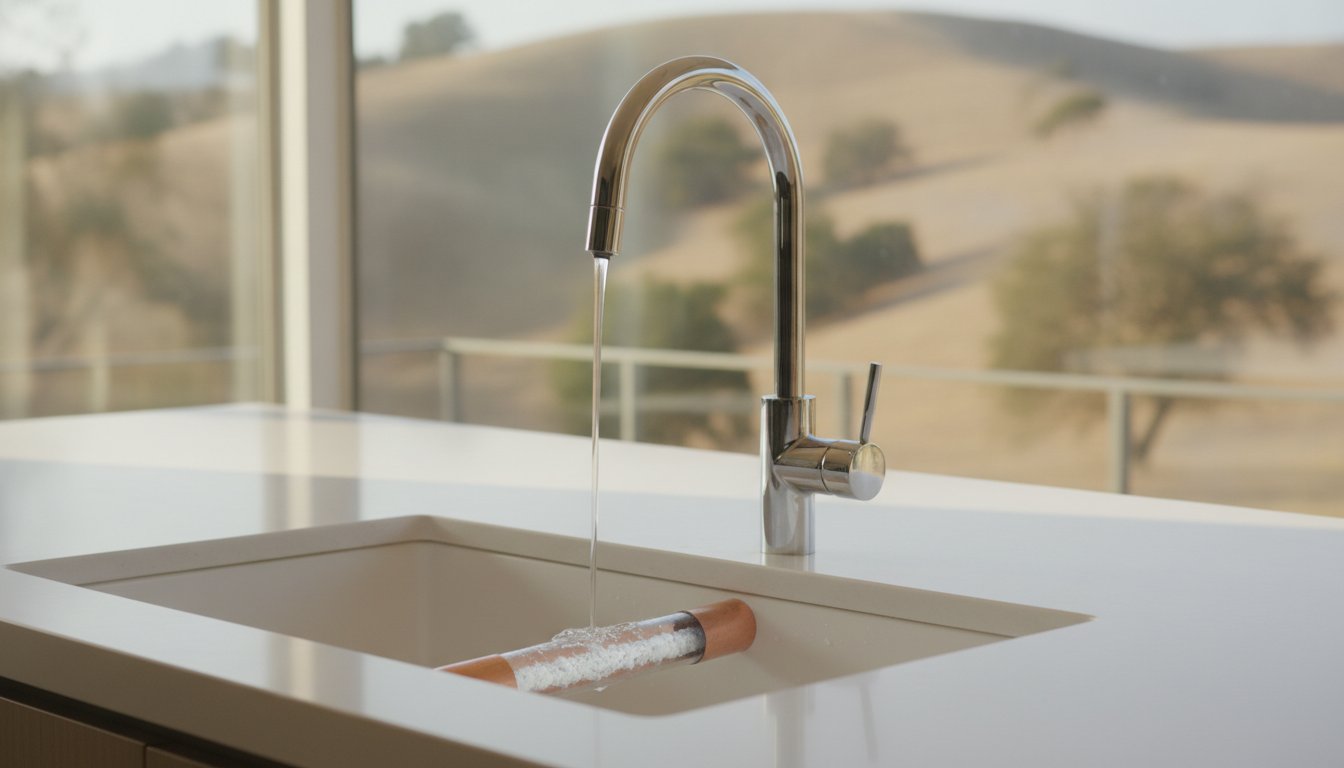
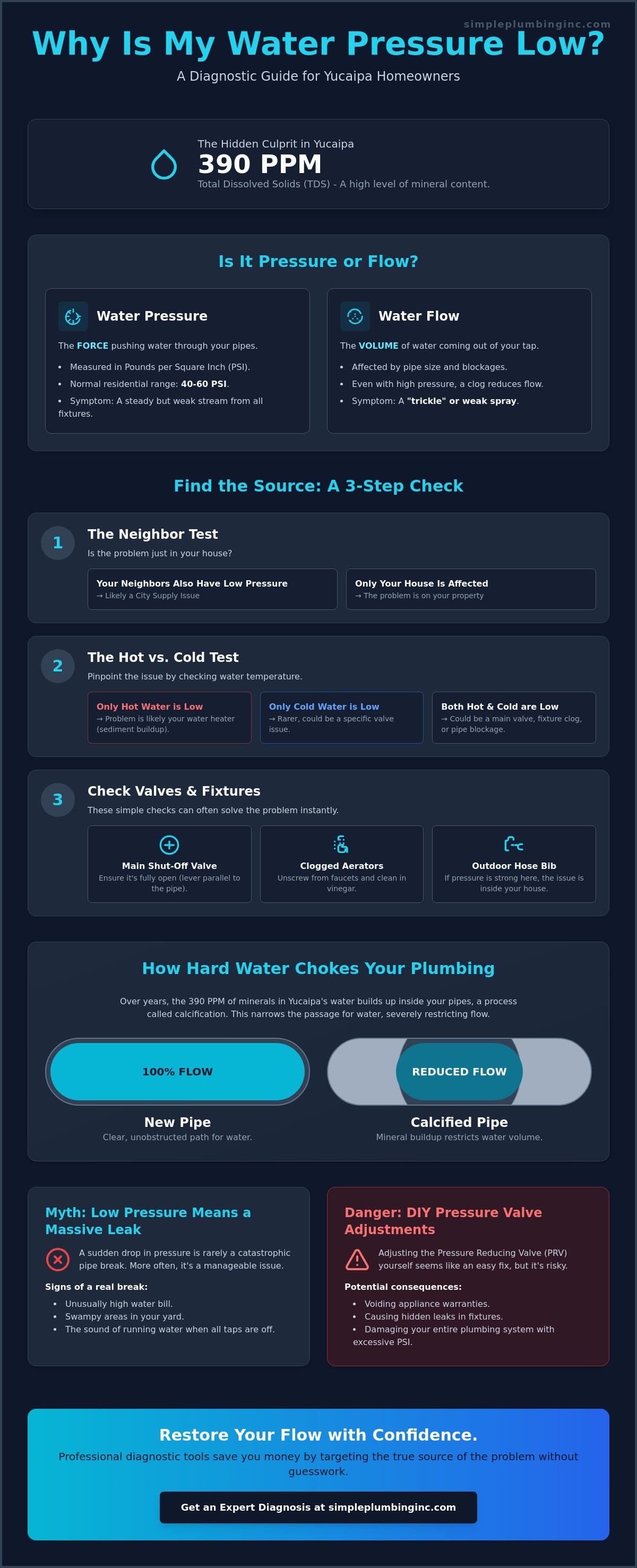
Did you know that Yucaipa’s water has a total dissolved solids count of 390 ppm? That is a high level of mineral content; it is often the invisible culprit behind your sputtering faucets. It is incredibly frustrating to step into the shower expecting a refreshing rinse only to be met with a weak, lukewarm trickle. You might worry about a hidden pipe leak or feel confused by technical plumbing terms you find online. These anxieties are common when you are staring at a slow drain and asking yourself, "why is my water pressure low?"
We understand how much a drop in pressure can disrupt your daily routine. You deserve a home that works reliably without the stress of "what-ifs." This guide will help you discover the real reasons behind your weak water flow. You will learn how to distinguish between a simple DIY fix and a serious plumbing issue that requires professional attention. We will walk through how local water hardness affects your pipes, look at California’s flow rate regulations, and provide a clear path to restore your home’s water pressure effectively.
Key Takeaways
- Distinguish between water flow and pressure to better identify the specific issue your home is facing.
- Get a clear answer to why is my water pressure low by exploring how mineral buildup and mechanical wear are the most likely culprits.
- Identify the risks of adjusting your Pressure Reducing Valve yourself and how it can cause hidden damage to your fixtures.
- Learn how the high mineral levels in Yucaipa's water lead to pipe calcification that restricts your water volume.
- Find out how professional diagnostic tools can save you money by targeting the source of the problem without guesswork.
Is It Really Low Pressure? Understanding Flow vs. Pressure
Before you can fix the problem, you need to understand what you are actually seeing. Many homeowners use the terms "pressure" and "flow" interchangeably, but they are different mechanical concepts. Water pressure is the force that pushes water through your pipes and into your home. Think of it like the air in a tire; it provides the energy. Water flow is the actual volume of water that comes out of your tap over a set period. If you have high pressure but a tiny pipe, you will still have poor flow.
A common frustration is seeing a "trickle" and asking, "why is my water pressure low?" However, a trickle is often a flow issue rather than a pressure issue. If you have plenty of force but very little water, you likely have a clog or a physical restriction. In contrast, if the water comes out in a steady but weak stream, the force itself is lacking. For standard American residential plumbing, water pressure is measured in pounds per square inch (PSI), with a normal range falling between 40 and 60 PSI.
The Neighbor Test: Is It Just You?
One of the simplest ways to start your investigation is to step outside. Talk to your neighbors or check local community boards. If your entire street is experiencing the same weak flow, the issue likely lies with the city supply rather than your home. Understanding how municipal water systems work can help you see why city maintenance or a water main break in Yucaipa might cause a temporary drop. If the neighbors have strong pressure, you know the problem is strictly within your property lines. This simple step can save you from calling a professional for a problem that is already being fixed by the city.
Hot vs. Cold: Narrowing Down the Source
Pay close attention to which taps are struggling and which temperatures are affected. If the pressure is only low when you turn on the hot water, the culprit is usually your water heater. Over time, Yucaipa’s hard water causes sediment to settle at the bottom of the tank, which blocks the exit pipe and restricts movement. If the issue happens with both hot and cold water at a single sink, you probably have a clogged aerator or a specific fixture problem. Cold-water-only issues are rarer but often point to a specific shut-off valve that isn't fully open. Narrowing this down helps you avoid unnecessary repairs and gets you closer to a solution.
Myth: Low Pressure Always Means a Massive Pipe Break
When you notice a sudden drop in force, it is easy to imagine a burst pipe flooding your crawlspace. This is a common fear, but it is rarely the reality. A massive pipe break usually makes itself known through a sky-high water bill or a literal swamp in your yard. If you are asking "why is my water pressure low" but your yard is dry and your meter isn't spinning like a top, the cause is likely much less dramatic. Most pressure issues are either mechanical failures in specific valves or the slow result of how hard water quietly chokes your plumbing over time. A steady drop in pressure is often a sign of a manageable maintenance issue rather than a catastrophe.
The Main Shut-off Valve Checklist
Start your investigation at the source. Your main shut-off valve controls every drop of water entering your home. If this valve is even slightly closed, it throttles your entire supply. There are two main types of valves to check. Gate valves have a round handle like a garden hose faucet. These can fail internally or "drift" toward the closed position over years of pipe vibration. Ball valves have a lever handle. You must ensure the lever is turned fully parallel to the pipe. It is also worth checking the meter box at the street. Sometimes, municipal workers partially close the street-side valve during nearby repairs and forget to open it completely when they finish.
Clogged Aerators and Showerheads
Sometimes the problem isn't your pipes at all. It is the very last stop before the water hits your hands. Aerators and showerheads are designed with fine mesh screens to catch debris and save water. In Yucaipa, these screens act like magnets for mineral scale. A tiny, inexpensive part can make it feel like your entire plumbing system is failing. To test this, unscrew the aerator from your faucet and turn the water on. If the flow returns to normal, you have found your culprit. You can usually clean these parts by soaking them in white vinegar for a few hours to dissolve the crusty buildup.
If you want to confirm the issue is inside your home, test the pressure at an outdoor hose bib. These usually bypass the internal filters and fixtures that get clogged first. If the hose has great pressure but your kitchen sink is weak, you are dealing with a localized fixture clog. If the hose is also weak, the problem is further back in the system. If these simple checks don't reveal the answer, a professional leak detection service can rule out hidden issues and provide peace of mind without the need for guesswork.
The Danger of DIY Fixes: Why You Should Not Just "Turn It Up"
You might be tempted to find the main valve and give the adjustment screw a turn. It seems like a quick solution when you are frustrated and asking "why is my water pressure low." However, the Pressure Reducing Valve (PRV) is the heart of your home's plumbing system. It is a sensitive mechanical device that protects your pipes from the high pressure of the municipal main. Don't treat it like a simple volume knob. Adjusting this valve without a professional pressure gauge is a gamble that can lead to expensive damage. If the pressure is set too high, it can blow out the seals in your dishwasher, damage your water heater, or cause a pipe to burst behind your walls. For safety and longevity, residential water pressure should never exceed 80 PSI.
A failing PRV often behaves unpredictably. It might cause your pressure to drop to a crawl, or it might allow dangerous spikes that stress every fixture in your house. When this valve stops working, "turning it up" won't fix the internal mechanical wear. It is like trying to fix a broken car engine by just pressing harder on the gas pedal. You need a clear diagnosis to ensure your home remains safe and your water flows reliably.
Signs Your Pressure Regulator Is Failing
There are a few reliable ways to tell if your regulator is on its way out. You might hear a distinct "thumping" or vibrating sound in your pipes whenever you turn on a tap. Another common sign is a sudden fluctuation in flow. The water might start with a strong burst for two seconds and then immediately fade into a weak stream. This happens because the pressure builds up while the tap is off, but the worn-out valve cannot maintain the flow once you open the faucet. Most PRVs have a predictable lifespan of 5 to 10 years. If your home is older and the valve has never been serviced, it is likely time for a replacement.
Hidden Leaks: When the Pressure Drop Is Real
Sometimes the drop in force is a sign that water is escaping somewhere else. While a small drip won't usually affect your shower, a significant leak can eventually sap the pressure from your entire home. You can perform a simple check at your water meter. Most meters have a small "leak indicator" triangle or star that spins when water is moving. If all your faucets are off and that indicator is still turning, you have a leak. To get a definitive answer and stop potential damage, you can schedule leak detection Yucaipa CA to protect your home and foundation.
How Yucaipa Hard Water Quietly Chokes Your Plumbing
Yucaipa's water is naturally rich in minerals. While it meets health standards, it is undeniably hard on your plumbing system. With a total dissolved solids count of 390 ppm, the local water carries a heavy load of calcium and magnesium. These minerals don't just flow through your system; they settle on the inner walls of your pipes. This process is known as calcification. It creates a hard, crusty layer of scale that builds up over several years. As the layer gets thicker, the space for water to move through gets smaller. This gradual narrowing is a primary reason why you might start wondering, "why is my water pressure low."
Older homes in our community are particularly susceptible to this issue. If your house was built several decades ago, it likely has galvanized steel pipes. These pipes are notorious for rusting from the inside out. The rough, rusted interior acts like a trap for mineral scale. You can think of it like a clogged artery in a human body. The pipe might look fine on the outside, but the internal opening has shrunk from an inch wide to the size of a pencil. When this happens, the volume of water reaching your shower is severely limited. Simply cleaning your faucet aerator won't fix this because the blockage is inside the main lines.
Mineral Scale in Galvanized Pipes
Galvanized pipes have a limited lifespan. Once the protective zinc coating wears off, the steel begins to corrode. This corrosion creates tubercules, or small mounds of rust and minerals. These mounds create turbulence and friction, slowing down the water. Copper pipes are more resistant to this, but even they can develop scale buildup in areas with very hard water like ours. If you live in an older Yucaipa neighborhood, this internal "choking" of your pipes is a common reality that eventually requires professional attention.
Water Heater Sediment and Pressure
Your water heater is often the first place to show signs of mineral trouble. As the tank heats up, minerals solidify and sink to the bottom. This creates a thick layer of sediment that acts as an insulator. It makes your heater work harder and eventually blocks the hot water outlet. If your hot water pressure is much weaker than your cold water, the tank is likely full of scale. Regular annual flushing is the best way to prevent this. However, if the sediment has already calcified into a solid mass, you may need a water heater replacement Yucaipa families trust to restore their comfort. To prevent this from happening to a new unit, we often recommend installing a water softener to catch those minerals before they enter your home's pipes.
Professional Solutions for Restoring Your Flow
Once you have a better idea of what might be happening behind your walls, it's time to move from investigation to implementation. Identifying why is my water pressure low is the first step toward reclaiming your morning shower. You don't have to navigate these technical hurdles alone. At Simple Plumbing Inc, we specialize in diagnosing the specific plumbing challenges that homeowners face here in Yucaipa. We don't believe in guessing. We start with a professional pressure test and a comprehensive system audit to find the exact source of your frustration. This clear, honest approach ensures you only pay for the repairs you actually need.
This commitment to transparency and expertise is a hallmark of quality plumbing companies worldwide; for instance, those in West Sussex can discover WellPlumbed for professional heating and plumbing services that prioritize long-term solutions.
Hydro Jetting and Drain Cleaning
It's a common mistake to confuse slow drainage with low water pressure. If your sinks are filling up while you use them, the problem might not be the water coming in, but the water trying to leave. A heavy backup in your sewer line can create a "sluggish" feeling throughout the home. While a standard drain snake is a good temporary fix for a simple clog, it doesn't remove the sticky residue or mineral scale that builds up over decades. This is where hydro jetting makes a difference. This process uses high-pressure water streams to scrub the inside of your pipes clean. It's a thorough way to clear out years of debris and restore the proper function of your drainage system.
Water Softeners: Preventing Future Pressure Drops
Restoring your pressure is great, but keeping it that way is even better. Since Yucaipa's water contains 390 ppm of total dissolved solids, mineral buildup is a constant threat to your plumbing. A water softener acts as a gatekeeper for your home. It removes the calcium and magnesium before they have a chance to settle in your pipes or "choke" your water heater. This proactive step protects your new fixtures and ensures your appliances live their full expected lifespan. It's one of the best investments you can make to avoid the stress of future pressure drops.
You deserve a plumbing system that is predictable and reliable. If you're tired of dealing with a weak trickle and want a straight-shooter assessment of your home's health, we're here to help. Contact Simple Plumbing Inc today to schedule a professional audit and get your water flowing the way it should.
Take the Next Step Toward Better Water Pressure
Dealing with a weak shower or a sputtering faucet is a daily frustration you shouldn't have to tolerate. You now know that a drop in force isn't always a sign of a catastrophic pipe break. It is often a manageable mechanical issue or a predictable result of Yucaipa’s mineral-heavy water. By understanding the difference between flow and pressure, you can avoid the risks of dangerous DIY adjustments and focus on the most effective path forward.
If you have checked your valves and aerators but are still asking "why is my water pressure low," it is time for a professional look. Simple Plumbing Inc is a veteran-owned and operated team committed to straight-shooting, no-fluff service. We provide expert leak detection and pipe repair to find the specific reason for your pressure drop without the guesswork. Stop struggling with weak water flow; contact Simple Plumbing Inc today for a professional pressure diagnostic in Yucaipa. We are ready to help you restore comfort and reliability to your home.
Frequently Asked Questions
Is low water pressure dangerous for my plumbing system?
Low water pressure itself isn't usually dangerous to your pipes, but it is often a symptom of a larger problem. The real concern is the cause of the drop, such as severe pipe corrosion or a hidden leak that could damage your home's foundation. While low pressure is frustrating, high water pressure is actually more damaging because it stresses your joints and appliances. Identifying the source of the drop helps you protect your home's long-term value.
Can a bad water heater cause low water pressure in the whole house?
No, a failing water heater will typically only affect the pressure of your hot water lines. If you notice a drop in both your hot and cold water taps, the issue is likely further back in your system, such as a main valve or a pressure regulator. If you are asking "why is my water pressure low" only when you take a shower or wash dishes with hot water, then your water heater's sediment levels are the most likely culprit.
How much water pressure should a house in Yucaipa have?
Most residential plumbing systems in Yucaipa should operate between 40 and 60 PSI. This range provides enough force for a comfortable shower while keeping your pipes and appliances safe from unnecessary stress. You should never allow your home's pressure to exceed 80 PSI, as this can lead to burst pipes and failed seals. If your pressure falls below 40 PSI, you will notice a significant and annoying drop in performance at every fixture.
Will a new showerhead fix my low water pressure?
A new showerhead will only solve the problem if your current one is physically clogged with mineral deposits. It is important to remember that California state regulations limit all new showerheads to a maximum flow rate of 1.8 gallons per minute. If you replace a vintage, high-flow fixture with a modern one, the water might actually feel weaker due to these conservation laws. Cleaning your current showerhead with vinegar is often a better first step than buying a replacement.
Why is my water pressure low only in the kitchen sink?
When low pressure is limited to a single sink, the problem is almost always localized to that fixture. The most common cause is a clogged aerator, which is the small mesh screen at the tip of the faucet. Minerals from Yucaipa’s hard water can easily block these screens over time. You should also check the shut-off valves under the sink to ensure they are fully open and haven't been bumped or partially closed.
How do I know if my water pressure regulator is bad?
A failing pressure regulator, or PRV, usually gives off a few clear warning signs. You might hear a thumping or vibrating sound in your walls when you turn on a tap. Another sign is "surging," where the water starts with a strong burst and then immediately fades to a weak trickle. Since these regulators typically last 5 to 10 years, any home older than a decade should have its regulator tested if the flow feels inconsistent.
Does a water softener help with water pressure issues?
A water softener is a preventive tool rather than a quick fix for existing clogs. It helps by removing the calcium and magnesium that cause scale buildup, stopping new blockages from forming in your pipes and water heater. However, a softener cannot dissolve the rock-hard scale that is already inside your plumbing. It is an excellent investment to protect your system after you have professionally restored your home's water pressure and flow.
Can a small leak cause a noticeable drop in water pressure?
Small leaks, like a dripping faucet or a running toilet, generally don't cause a noticeable drop in water pressure. These leaks waste a lot of water and drive up your bill, but they don't sap enough force to make your shower feel weak. You would need a significant leak, such as a cracked main line or a major pipe failure, to see a real difference at the tap. If your pressure drops suddenly, it is more likely a valve or regulator issue.


