
The oldest water heater in your home isn’t automatically the one that needs replacing. When hot water becomes unreliable, the real question is whether a repair can restore dependable service or whether the heater’s condition makes replacement the wiser choice. The water heater repair vs replacement decision can feel risky if you’re concerned about paying for a fix that won’t last.
A targeted repair may make sense when the problem is limited and the heater is otherwise in good condition. In Yucaipa, hard water can contribute to mineral buildup, so ask a plumber to check the cause of the problem, the unit’s overall condition, and whether the proposed repair addresses the issue. Your household’s need for consistent hot water matters, too.
This guide explains what a plumber may inspect and how to compare repair and replacement based on condition, work scope, reliability, and household needs. Before requesting service, gather the heater’s approximate age, the symptoms you’ve noticed, and when they began. If replacement is the better fit, Simple Plumbing Inc. provides water heater replacement in Yucaipa.
Key Takeaways
- For water heater repair vs replacement, weigh the diagnosed fault and likely reliability, not age alone.
- An inspection should connect your symptoms to the cause before a repair or replacement is recommended.
- Compare the proposed work, expected outcome, and household disruption to see which option fits your needs.
- Before approving work, ask what the diagnosis found, what the recommendation includes, and what it won’t address.
- Once you understand the findings, decide whether repair is practical or explore water heater replacement in Yucaipa.
Water Heater Repair vs. Replacement: What Should You Decide First?
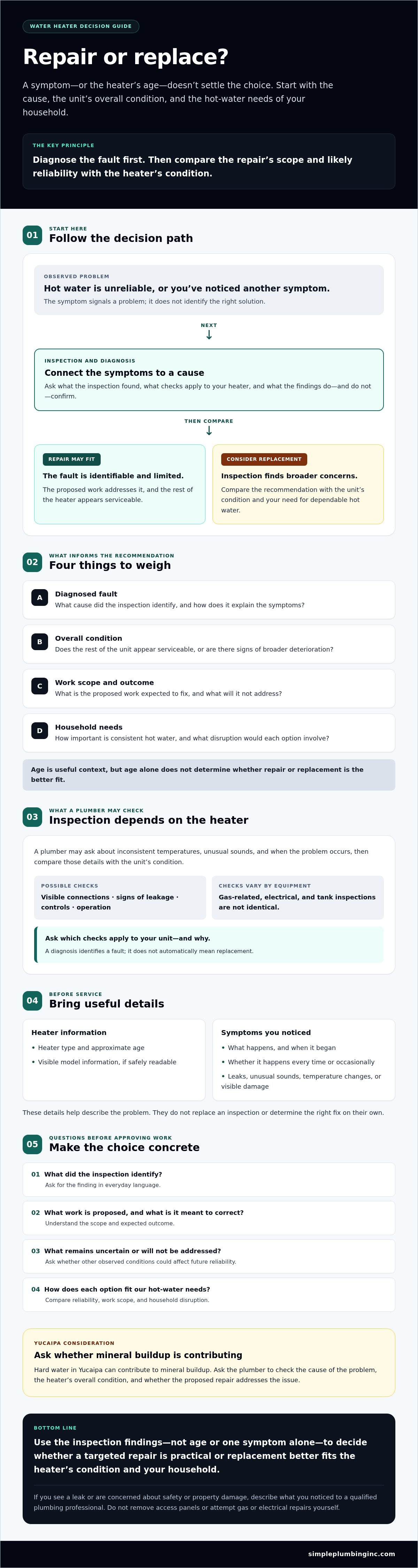
When hot water becomes unreliable, it can be hard to know whether to call for a repair or plan for a new heater. Repair corrects a diagnosed fault in the existing unit. Replacement removes that unit and installs a new heater. The symptom alone doesn’t settle the water heater repair vs replacement question. A loss of hot water signals a problem, but not which solution is right.
Start with an inspection. The decision should reflect the cause, the heater’s overall condition, the work a repair would involve, and your household’s need for dependable hot water. A focused repair may be reasonable when the fault is limited and the rest of the unit is in sound condition. If the inspection finds broader problems, replacement may be worth considering. Heater type can also affect what a plumber checks. For background, see this overview of types of water heating appliances.
What information helps a plumber assess the water heater?
Before requesting service, note the heater type, its approximate age, and any visible model information on the unit’s label, if you can read it safely. You don’t need to identify the fault. Describe what you’ve observed and when it began.
- Does the problem happen every time, or only occasionally?
- Have you noticed leaks, unusual sounds, or changes in water temperature?
- Is there visible damage around the heater?
These details help explain the problem, but they don’t replace an inspection or determine the right fix on their own.
Which symptoms need prompt attention?
A lack of hot water can disrupt daily routines. Visible water leaking around the heater raises a separate concern because it may damage nearby floors or belongings. If you see a leak, note where the water is and whether it appears to be spreading. Don’t remove access panels or attempt gas or electrical repairs yourself.
If you’re concerned about safety or property damage, contact a qualified plumbing professional. Describe what you’ve noticed and ask what needs attention first. The inspection findings can help clarify whether repair is practical or replacement better fits the heater’s condition and your household’s needs.
How a Water Heater Diagnosis Shows Whether Repair Is Practical
A reliable recommendation starts with identifying the cause of the problem. The same symptom can have different explanations, and the inspection depends on the heater and what you’ve noticed. A plumber may ask about inconsistent temperatures, unusual sounds, or when the problem occurs, then compare those details with the unit’s condition.
A diagnosis identifies the fault; it does not automatically mean replacement. A problem with one component may be repairable, while signs of broader deterioration can change the outlook. The key question is whether the identified issue can be addressed while the heater remains serviceable, or whether the findings suggest more extensive concerns.
What might a plumber inspect?
The inspection may include visible connections, signs of leakage, controls, and how the heater behaves during operation. Checks depend on the equipment. Gas-related, electrical, and tank inspections aren’t identical, so ask which checks apply to your unit and why.
Ask for a plain-language explanation of the findings. A clear assessment should connect your symptoms to the suspected fault, describe the recommended next step, and identify any limits to what the inspection confirmed. If replacement is being discussed, efficiency may be one factor to compare. ENERGY STAR certified water heaters can help you explore efficient options.
When could a repair make sense?
Repair may be reasonable when the cause is identifiable, the proposed work addresses that fault, and the rest of the unit appears serviceable. No diagnosis can promise that another issue won’t arise later, so ask what the repair is expected to fix and what it doesn’t address.
- What did the inspection identify? Ask the plumber to explain the finding in everyday terms.
- What work is proposed? Find out which problem the repair is meant to correct.
- What remains uncertain? Ask whether other observed conditions could affect the heater’s future reliability.
These answers make the water heater repair vs replacement choice more concrete. Weigh the specific repair against the unit’s overall condition instead of relying on a symptom or age alone. If the findings point to replacement, review water heater replacement information from Simple Plumbing Inc., a Yucaipa plumbing company.
Repair vs. Replacement: Compare Reliability, Scope, and Household Needs
Once the inspection findings are clear, compare what each option addresses. A repair may solve a specific fault with less work. Replacement addresses the existing heater as a whole, but involves removing and installing equipment. Neither option guarantees trouble-free operation. Consider which choice best fits the diagnosed condition and your household’s needs.
Age matters most alongside condition, repair scope, and reliability. A newer heater can have a repairable component issue, while an older unit with recurring problems or significant deterioration may call for a broader discussion. Age alone doesn’t tell you what an inspection will find.
| Factor | Repair | Replacement |
|---|---|---|
| Diagnosed condition | May fit an isolated, identifiable fault when the rest of the unit remains serviceable. | May be considered if findings point to wider deterioration or recurring problems. |
| Work scope | Focuses on correcting the diagnosed issue. Ask what the work won’t address. | Involves removing the existing heater and installing a new one. |
| Expected reliability | Depends on the repair and the condition of the rest of the heater. Future issues can’t be ruled out. | Starts with new equipment, but the recommendation should still account for your home and installation needs. |
| Household disruption | May involve a narrower scope of work, depending on the fault. | Requires a larger installation project. Ask what the process means for access and hot water. |
How do repair history and condition affect the choice?
Consider whether this is the first service issue or part of a pattern. Tell the plumber about previous symptoms or work, if you know it. Then ask whether the current finding is limited to one component or points to wider deterioration. Repeated faults don’t automatically settle the decision, but they can affect how practical another repair looks.
How should you weigh disruption and future plans?
Consider how consistently your household needs hot water in the coming months. Ask whether the repair is intended to address only today’s symptom or a concern that could affect continued operation. That explanation can help you weigh the immediate work against planning for a new heater.
If replacement is being considered, use this water heater replacement guide for Yucaipa to learn more about planning. The water heater repair vs replacement decision is clearer when you consider age, condition, repair scope, and household priorities together.
Questions to Ask Before Approving Water Heater Repair or Replacement
A clear recommendation should explain what’s wrong, what the proposed work will do, and why it suits your heater. Use these questions during the service visit. You don’t need to know technical terms. Ask for straightforward answers you can compare.
Questions that make the recommendation clearer
- 1. What failed, and how did you confirm it? Ask the plumber to connect the diagnosis to your symptoms and explain whether the inspection revealed other concerns.
- 2. What exactly would the repair address? Clarify which issue the work is meant to fix, and ask whether follow-up or monitoring may be needed.
- 3. What would the repair leave unresolved? A repair can target one fault without addressing other signs of wear. Ask what remains uncertain about the heater’s condition.
- 4. Why are you recommending replacement? If repair is still technically possible, ask what makes replacement the better fit. Request a clear explanation of the findings and available replacement options.
- 5. How do the two options compare in scope and expected outcome? Consider what each option includes, how it may affect access to hot water, and what the plumber expects it to resolve. Compare the specific work proposed rather than relying on a general price rule.
These questions turn a broad water heater repair vs replacement decision into a practical comparison. The goal isn’t to push for one answer. It’s to understand the diagnosis well enough to decide whether the proposed work fits your priorities.
What to prepare before contacting a Yucaipa plumber
Gather what you can without opening or dismantling the heater. Note its approximate age, fuel type, and model information if visible. Describe what’s happening, when it started, whether it’s consistent, and any previous service you remember. Share observations rather than trying to identify the cause yourself.
If you’re weighing a new unit, this Yucaipa water heater replacement guide offers more context for planning. To discuss replacement options, contact Simple Plumbing Inc about water heater replacement in Yucaipa.
Get a Clear Water Heater Recommendation in Yucaipa
Don’t choose between repair and replacement based on one symptom or a rule of thumb. Start with an inspection, then compare the diagnosed condition and proposed work with your household’s needs. A clear explanation should tell you why an option is recommended and what it will, and won’t, address.
What to expect when discussing water heater service
Describe what you’ve noticed, when it began, and whether the problem happens consistently. Share the heater’s approximate age and any previous service details you have. Ask what inspection is appropriate for your equipment and symptoms. You don’t need to diagnose the issue before calling; your observations give the plumbing professional a useful starting point.
Before approving work, ask for the findings in plain language. If repair is suggested, make sure you understand which fault it addresses and whether anything else remains uncertain. If replacement is recommended, ask what about the heater’s condition makes repair less suitable. The water heater repair vs replacement decision should follow the diagnosis, not pressure or guesswork. Take time to review the options if you still have questions.
When replacement is the recommended next step
A professional may discuss replacement if the inspection finds that repairing the heater isn’t a practical way to address its condition. Ask what the recommendation is based on and what choices are available for your home. Simple Plumbing Inc. is a Yucaipa plumbing company offering water heater replacement, which may be relevant if the inspection points toward installing a new heater.
For more detail before planning, read the complete Yucaipa water heater replacement guide. It can help you prepare questions about next steps. Keep your inspection notes handy so you can compare the recommendation with your household’s priorities.
If you’re ready to discuss your situation, contact Simple Plumbing Inc to discuss water heater service. Share your symptoms and ask what the next step may involve.
Make Your Next Water Heater Decision With Confidence
The right choice depends on what an inspection finds, not age or one symptom alone. Compare the diagnosed condition, the scope of the proposed repair, and how reliably your household needs hot water. Ask what the recommendation will address and what it may leave unresolved. That gives you a clearer basis for weighing water heater repair vs replacement.
If the findings point to replacement, Simple Plumbing Inc. is a Yucaipa plumbing company offering water heater replacement. The company is veteran-owned and operated by a U.S. Marine Corps veteran. A straightforward conversation can help you understand the next step.
Contact Simple Plumbing Inc to discuss your water heater and ask about options for your situation. With clear information in hand, you can move forward with greater confidence.
Frequently Asked Questions
Should I repair or replace my water heater?
Base the decision on the inspection findings, not one symptom or the heater’s age alone. Repair may be reasonable if the problem is clearly identified and the unit remains serviceable. Replacement may make more sense if the inspection finds broader deterioration or recurring faults. Ask what each option addresses, what could remain unresolved, and how it fits your household’s need for reliable hot water.
Can a leaking water heater be repaired?
Sometimes, but it depends on where the water is coming from and what the inspection finds. A plumber can check whether the leak is connected to a fitting or another part of the system, or whether the heater itself shows more serious deterioration. Don’t assume a leak is a minor repair. If water is spreading or you’re concerned about damage or safety, contact a qualified plumbing professional and describe what you see.
How do I know if a water heater repair will last?
No repair can guarantee that another problem won’t develop. Ask the plumber what caused the current issue, how the proposed work addresses it, and whether the inspection found other concerns. The heater’s overall condition and repair history also matter. Before approving work, clarify what the repair is expected to resolve and what remains uncertain.
Does an older water heater always need replacement?
No. Age is useful context, but it doesn’t prove replacement is necessary. An older heater may have a specific repairable fault, while a newer one may have a more serious problem. Ask the plumber to assess the unit’s condition, identify the cause of the symptoms, and explain the repair scope. Consider age alongside those findings and your household’s hot water needs.
What should a plumber check before recommending water heater replacement?
The inspection should relate your symptoms to the heater’s condition. Depending on the equipment, the plumber may check visible connections, signs of leakage, controls, and operating behavior. Ask what the inspection found, whether the problem appears isolated or part of wider deterioration, and why replacement is recommended over repair. A clear explanation should also outline what replacement would address and what options may suit your home.
Is it worth repairing a water heater that has needed repeated service?
It depends on whether earlier problems were isolated or suggest ongoing concerns. Share the service history you have and ask the plumber to distinguish the current fault from any wider deterioration. Repeated service doesn’t automatically mean replacement is the only choice, but it can affect how practical another repair may be. Compare the proposed repair’s scope and expected outcome with the findings behind a replacement recommendation.
How can I compare a repair recommendation with a replacement recommendation in Yucaipa?
Ask for the diagnosis, the work included in each option, what each is expected to address, and any remaining uncertainties. In Yucaipa, mention the heater’s age, fuel type, symptoms, and past service when requesting an assessment. Simple Plumbing Inc. is a Yucaipa plumbing company offering water heater replacement. Base your decision on the inspection findings and your household’s priorities, not an unsupported price rule.


