
What if the drain that looks like the problem is only showing you where a bigger blockage is? When several fixtures slow down, gurgle, or back up, it’s understandable to wonder whether the main sewer line is clogged. But one troublesome sink or toilet can still point to a local clog. The pattern matters, and symptoms alone can’t confirm the cause.
This guide to clogged main sewer line symptoms explains how to spot signs affecting more than one fixture, distinguish a possible main line issue from a single-drain blockage, and decide what to do next. If sewage is backing up, stop using water throughout the house to reduce the chance of more wastewater entering your home.
We’ll cover seven signs to check, what details to share with a plumbing professional, and how an assessment can help determine whether drain cleaning or sewer line repair may be appropriate. You’ll get a clearer picture of what the symptoms suggest without guessing based on one slow drain.
Key Takeaways
- Several clogged main sewer line symptoms appearing together may point to a shared blockage, but they don’t confirm its cause.
- Compare which fixtures are affected and when problems occur to help distinguish a local drain issue from a possible main line problem.
- Note affected fixtures, timing, odors, and where wastewater appears so you can give a plumber useful details.
- A professional assessment can help determine whether drain cleaning, hydro jetting, or sewer line repair fits the diagnosed problem.
Clogged Main Sewer Line Symptoms: A Homeowner’s Checklist
A blockage in the main sewer line can slow or stop wastewater from leaving multiple fixtures. The line carries wastewater from your home toward the public sewer as part of a sanitary sewer system. If sinks, tubs, showers, or toilets start acting up around the same time, note the pattern. Several affected drains, recurring backups, gurgling, and sewer-like odors are possible warning signs, but none confirms the cause on its own.
A main sewer line clog is a blockage in the shared pipe that carries wastewater from multiple household drains away from the home. A slow sink by itself may have a local cause. The clues become more concerning when separate fixtures are affected or wastewater appears where it shouldn’t.
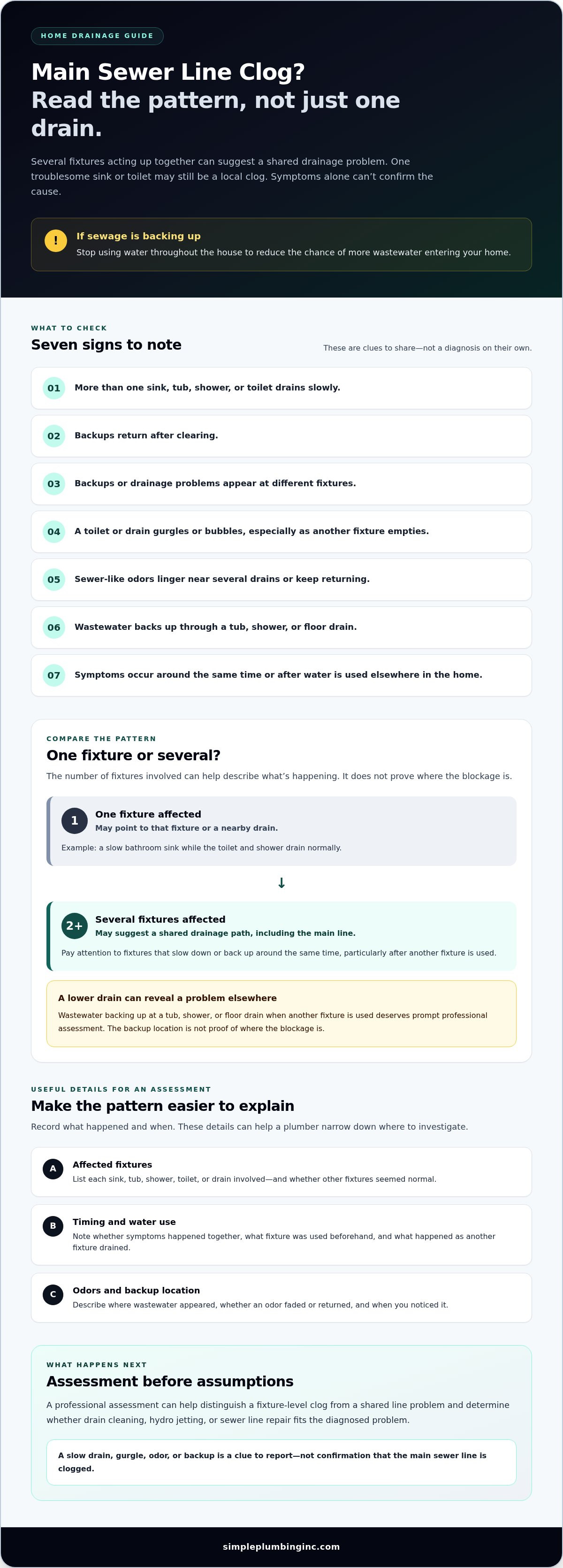
- More than one sink, tub, shower, or toilet drains slowly.
- Backups return after clearing or appear at different fixtures.
- A toilet or drain gurgles or bubbles, especially as another fixture empties.
- Sewer-like odors linger near several drains or keep returning.
Which drain and fixture symptoms should you look for?
Check whether the problem is limited to one fixture or appears across the home. For example, a slow bathroom sink with normal toilet and shower drainage may point to a localized issue. If the toilet, tub, and nearby sink drain poorly together, a shared drainage problem becomes more plausible. Gurgling or bubbling is useful to report, particularly when it happens as another fixture drains, but it isn’t a diagnosis by itself.
Write down which fixtures are affected and whether they worsen at the same time. That pattern can help a plumber narrow down where to investigate.
What sewage odors or backups may indicate
A brief odor after using one fixture can have a different cause from a persistent sewer-like smell near several drains. Note whether the odor fades quickly, returns repeatedly, or seems strongest in one area. Record when it occurs, such as after flushing a toilet or running a tub.
Wastewater backing up through a tub, shower, or floor drain deserves prompt professional assessment, especially if it happens when another fixture is used. These low drains can reveal a drainage problem elsewhere in the system. Don’t treat the backup location as proof of where the blockage is. The full symptom pattern, followed by an assessment, helps clarify what’s happening.
Main Sewer Line Clog or Local Drain Clog? Compare the Symptom Pattern
One slow sink or toilet doesn’t automatically mean the main sewer line is clogged. A problem limited to one fixture may be local, while trouble affecting several fixtures can suggest a shared drainage issue. Use this comparison to describe what’s happening, not to confirm the cause. A plumber’s assessment is needed to identify the source.
| What you notice | What it may suggest |
|---|---|
| One sink, tub, or toilet drains slowly; other fixtures seem normal | A clog affecting that fixture or a nearby drain |
| Several fixtures drain slowly or act up around the same time | A possible issue in a shared drainage path, including the main line |
| Wastewater backs up at a lower-level drain when another fixture is used | A possible shared blockage that needs prompt assessment |
When one slow fixture may point to a local clog
If only one sink, tub, or toilet is affected, the problem may be limited to that fixture or its nearby drain. For example, a slow bathroom sink while the toilet and shower drain normally is a different pattern from several fixtures backing up together. If the issue persists or returns, have it assessed rather than assuming a quick fix will solve it.
When several drains suggest a shared blockage
Notice whether symptoms affect separate fixtures, especially after water is used elsewhere in the home. Record which fixtures were used and what happened next. If wastewater appears at a lower-level tub, shower, or floor drain, note its location and timing. The U.S. Environmental Protection Agency explains that sanitary sewer overflows can back-up into homes, so recurring wastewater backups warrant prompt attention.
A toilet that gurgles only when flushed is useful information, but it doesn’t establish that the main line is clogged. If several drains slow down or back up in sequence, that broader pattern gives a plumber more context. Share which fixtures were involved, whether symptoms happened simultaneously, and what water was running beforehand. A local assessment can help distinguish a fixture-level clog from a shared line problem. If you’re in the area, learn more about Simple Plumbing Inc’s drain and sewer services.
Could Something Else Cause Clogged Main Sewer Line Symptoms?
Yes. Slow drainage, gurgling, or wastewater backing up can come from a clog at one fixture, a blockage in a branch drain, or an issue in the main sewer line. The number of affected fixtures and where a backup appears can help narrow the possibilities, but neither clue proves which pipe is involved.
A symptom checklist can help narrow down possible drainage problems, but it can’t locate a blockage or confirm its cause. Don’t assume that tree roots, damaged pipes, or buildup are responsible based on symptoms alone. Those causes require an appropriate assessment.
How fixture and branch drain problems can look similar
A branch drain is a smaller pipe that carries wastewater from one or more connected fixtures toward a larger drain line. If nearby fixtures share a branch, a problem there could affect more than one sink, tub, or toilet without involving the main line. Fixtures in separate areas may show a different pattern, but one gurgling drain or backup still can’t identify the exact pipe.
Note both the affected fixtures and their locations. If two nearby fixtures act up while others work normally, share that detail with the plumber. It provides useful context without turning a clue into a diagnosis.
Why a professional assessment may be needed
A plumber can review when symptoms occur, which fixtures are affected, and where wastewater appears. Based on that information, they can decide what diagnostic steps make sense. A sewer camera inspection may be one possible method, but its suitability depends on the situation. It shouldn’t be assumed as the first or only step.
The findings matter because clearing an obstruction and repairing a damaged line are different needs. If cleaning is appropriate, drain cleaning or hydro jetting may be options. If the assessment points to pipe damage, sewer line repair may be needed instead. The right approach depends on the identified cause, not simply on the list of clogged main sewer line symptoms.
If you’re unsure what the pattern means, write down what happened before the problem started: which fixtures were used, which ones were affected, and whether symptoms appeared together. A professional assessment can use those observations to help distinguish a fixture or branch drain issue from a possible main line problem.
What to Do When You Notice Main Sewer Line Clog Symptoms
If you suspect a shared drainage problem, focus first on limiting further backups and recording clear observations. You don’t need to identify the cause yourself. A concise record can help a plumber decide what to assess.
- Pause water use in affected fixtures. If wastewater is actively backing up, limit water use throughout the home while you seek professional guidance.
- Keep people away from wastewater. Avoid touching sewage or contaminated water, and keep children and pets away from affected areas.
- Write down the pattern. Record which fixtures are affected, when symptoms happen, and where wastewater appears.
- Contact a qualified plumber if backups recur. Describe what you’ve observed and ask about service availability for your location.
These steps don’t confirm clogged main sewer line symptoms or determine the repair. They help you share useful information and reduce unnecessary water use while arranging an assessment.
What information should you share with a plumber?
Be specific. List each affected sink, tub, shower, toilet, or floor drain, and note whether the problems began together or one after another. Mention any wastewater backup, sewer-like odor, gurgling, or recurrence. Share what fixtures were used shortly before symptoms appeared, and say whether your home is in Yucaipa or another location so service availability can be confirmed.
If it’s safe, a photo of the affected area may help explain what you saw. Don’t put yourself in contact with wastewater to take one.
When should you stop using affected plumbing?
Stop using fixtures that are actively causing or worsening a backup. If wastewater is coming into the home, limit other water use as well and seek prompt professional guidance. Avoid flushing the drain or testing it repeatedly, since added water may worsen an active backup. Ask the plumber what to do while you wait; don’t assume a particular response time or repair outcome.
For background on what sewer line repair may involve, read this sewer line repair guide. To discuss recurring backups or a possible sewer line issue, contact Simple Plumbing about sewer line repair and confirm whether service is available at your address.
How a Plumber Can Address a Clogged Main Sewer Line in Yucaipa
Several clogged main sewer line symptoms can point to a shared drainage problem, but they don’t show whether the line needs cleaning or repair. A plumber should assess the symptom pattern and line condition before recommending a method. That helps avoid treating a symptom without addressing its cause.
How diagnosis guides cleaning or repair
The right approach depends on what’s obstructing the line and whether the pipe is in suitable condition for cleaning. Drain cleaning and hydro jetting are service options, not automatic solutions for every backup. Hydro jetting uses high-pressure water to clean inside a pipe, but a plumber should first consider whether it’s appropriate for that line. If findings point to damage rather than a removable obstruction, sewer line repair may be the relevant next step.
Ask what the assessment found, what work is recommended, and why that method fits the issue. A clear explanation should connect the observed problem to the proposed service.
Choosing a local sewer line professional
Look for a plumber who can explain the findings in plain language, outline the proposed work, and discuss relevant alternatives. You should understand whether the recommendation is drain cleaning, hydro jetting, sewer line repair, or another next step, and what information supports that choice. Symptoms alone aren’t enough to select a repair method.
Simple Plumbing Inc is based in Yucaipa and offers sewer line repair, drain cleaning, and hydro jetting. If you’re outside Yucaipa, confirm that service is available at your address before making plans. The company’s services may be relevant, but the appropriate option depends on an assessment of your particular plumbing issue.
Before agreeing to work, consider asking:
- What did the assessment show about the blockage or pipe condition?
- Why is this cleaning or repair method recommended?
- Are there other reasonable options based on the findings?
These questions can help you make an informed decision without guessing from symptoms or feeling pressured to choose a particular approach. For a professional assessment of your sewer or drain concern, contact Simple Plumbing Inc and confirm service availability for your location.
Use the Symptom Pattern to Choose Your Next Step
Several clogged main sewer line symptoms appearing together can suggest a shared drainage issue, while one slow fixture may have a local cause. Neither pattern confirms what’s wrong. Note which fixtures are affected, when symptoms occur, and where wastewater appears. Those details can help a plumber assess the problem and recommend an appropriate next step.
If wastewater is backing up, pause water use in affected areas and avoid contact with it. Recurring backups or problems across several fixtures are good reasons to seek a professional assessment rather than guess at the cause. Cleaning may be appropriate for an obstruction, while a damaged line may call for repair.
Simple Plumbing Inc is a veteran-owned plumbing company based in Yucaipa, California. It provides sewer line repair, drain cleaning, and hydro jetting, with the right service depending on the assessment. To discuss what you’re noticing, contact Simple Plumbing Inc about your sewer line symptoms. A clear explanation of the issue can help you move forward with more confidence.
Frequently Asked Questions
What are the most common symptoms of a clogged main sewer line?
Common clogged main sewer line symptoms include slow drainage in several fixtures, recurring backups, gurgling or bubbling sounds, and sewer-like odors near multiple drains. Wastewater backing up through a tub, shower, or floor drain is another concerning sign. These clues are more useful as a pattern than in isolation. They can suggest a shared drainage issue, but a plumber’s assessment is needed to confirm the cause.
Can one clogged toilet mean the main sewer line is blocked?
One clogged toilet doesn’t automatically mean the main sewer line is blocked. If sinks, tubs, and other toilets drain normally, the issue may be limited to that toilet or a nearby drain. Watch for other fixtures becoming slow or backing up, especially if symptoms return. If the problem persists, a plumber can assess whether it’s local or part of a wider drainage issue.
Why do multiple drains back up at the same time?
Multiple drains may back up together when wastewater can’t flow freely through a shared part of the drainage system. That could involve a branch drain serving nearby fixtures or the main sewer line. Notice which fixtures are affected and whether symptoms begin together or after particular water use. The pattern helps a plumber narrow down where to investigate, but it can’t identify the exact blockage by itself.
What happens if a main sewer line clog is left untreated?
An unresolved blockage can continue to restrict wastewater flow and lead to recurring or worsening backups. If wastewater enters the home, it can affect floors, belongings, and the surrounding area. Don’t keep using plumbing to test whether the problem has cleared. Limit water use if a backup is active, keep people and pets away from wastewater, and seek professional guidance to determine what’s causing it.
Is a sewer smell always a sign of a main line blockage?
No. A sewer-like smell can have causes other than a main line blockage, and an odor near one fixture doesn’t establish where a problem is. Note whether the smell is brief or persistent, which drains it comes from, and whether other fixtures are also acting up. An odor combined with recurring backups or slow drainage in several areas is useful information to share with a plumber.
How can a plumber tell whether the main sewer line is clogged?
A plumber can use your observations, such as affected fixtures, backup locations, and timing, to guide an assessment. Depending on the situation, they may recommend additional diagnostic steps, which could include a sewer camera inspection if appropriate. The goal is to identify whether the issue is in a fixture drain, a branch, or the main line, and whether cleaning or repair fits the findings. Simple Plumbing Inc is based in Yucaipa; confirm availability for your address.
Can hydro jetting clear a clogged main sewer line?
Hydro jetting can clear some sewer line obstructions by using high-pressure water to clean inside the pipe, but it isn’t suitable for every situation. A plumber should first assess the blockage and consider the line’s condition before recommending it. If the pipe is damaged or the issue requires repair, cleaning alone may not address the cause. Simple Plumbing Inc offers hydro jetting, drain cleaning, and sewer line repair in Yucaipa.


