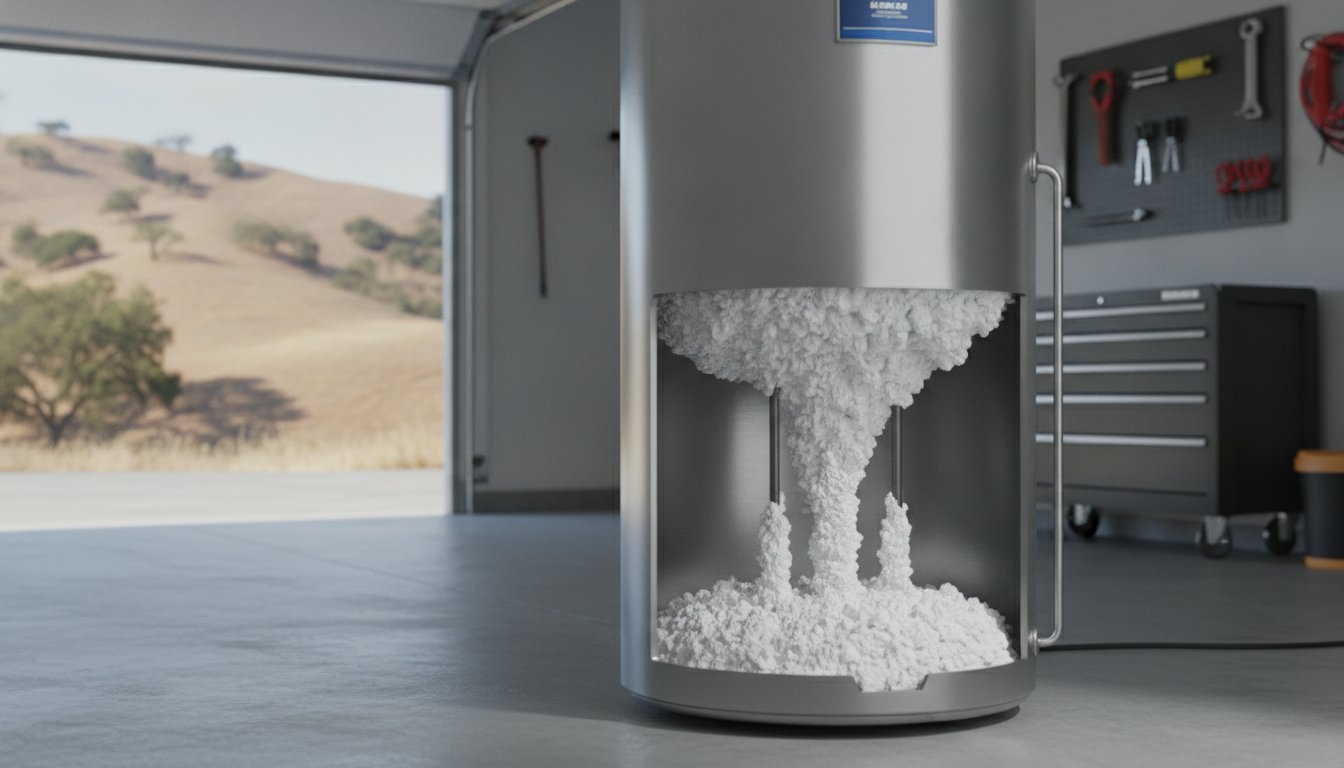
Have you ever wondered why your water heater sounds like it is popping popcorn in the middle of the night? In Yucaipa, our local water carries a heavy load of minerals, with Total Dissolved Solids (TDS) levels measured at 390 ppm. This isn't just a statistic; it's the primary reason hard water damage water heater systems fail prematurely throughout our neighborhoods. You might notice your utility bills creeping up or your morning shower turning lukewarm much faster than it used to. It's a common frustration, and it's natural to worry about a sudden, messy tank failure in your garage.
We believe in providing honest answers without the fluff or sales pressure. In this guide, you'll learn how mineral buildup silently destroys your water heater and what you can do to stop it before a costly breakdown occurs. We'll explain the mechanics of why these units fail and help you figure out if your current heater is salvageable or if it's time for a replacement. This guide gives you a clear, logical path toward a more reliable home and lower monthly costs with the help of a neighborly expert who knows Yucaipa water best.
Key Takeaways
- Learn how heat turns dissolved minerals into a "sediment blanket" that forces your heater to work harder and drives up your utility bills.
- Recognize the popping noises and lukewarm showers that signal advanced hard water damage water heater units often develop in Yucaipa.
- Understand the limitations of annual flushing and why it cannot remove scale once it has hardened to the bottom of the tank.
- Use the "Rule of 10" to get an honest assessment of whether to repair your current unit or invest in a new replacement.
- Find out how local water softening solutions provide a long-term ROI by stopping mineral buildup before it starts.
Understanding Hard Water Damage and Your Water Heater
When we talk about hard water, we are describing water that contains high levels of dissolved minerals, primarily calcium and magnesium. These minerals aren't harmful to drink, but they are incredibly tough on your home's plumbing. You can find a detailed scientific breakdown of what is hard water? on Wikipedia, but for a homeowner, the most important thing to know is how it behaves when it gets hot. In Yucaipa, these minerals are a constant presence in our local supply. They act as a "silent killer" because the damage happens entirely on the inside of your tank. You won't see a single drop of a leak or a speck of rust on the outside while the internal components are slowly being buried in rock.
This process is the primary driver of hard water damage water heater systems face in the Inland Empire. By the time you notice a change in your water temperature or hear strange noises from the garage, the mineral buildup has usually been growing for years. It is a slow, invisible transition from a high-performing appliance to one that is struggling just to keep up with a single shower.
What Makes Yucaipa Water 'Hard'?
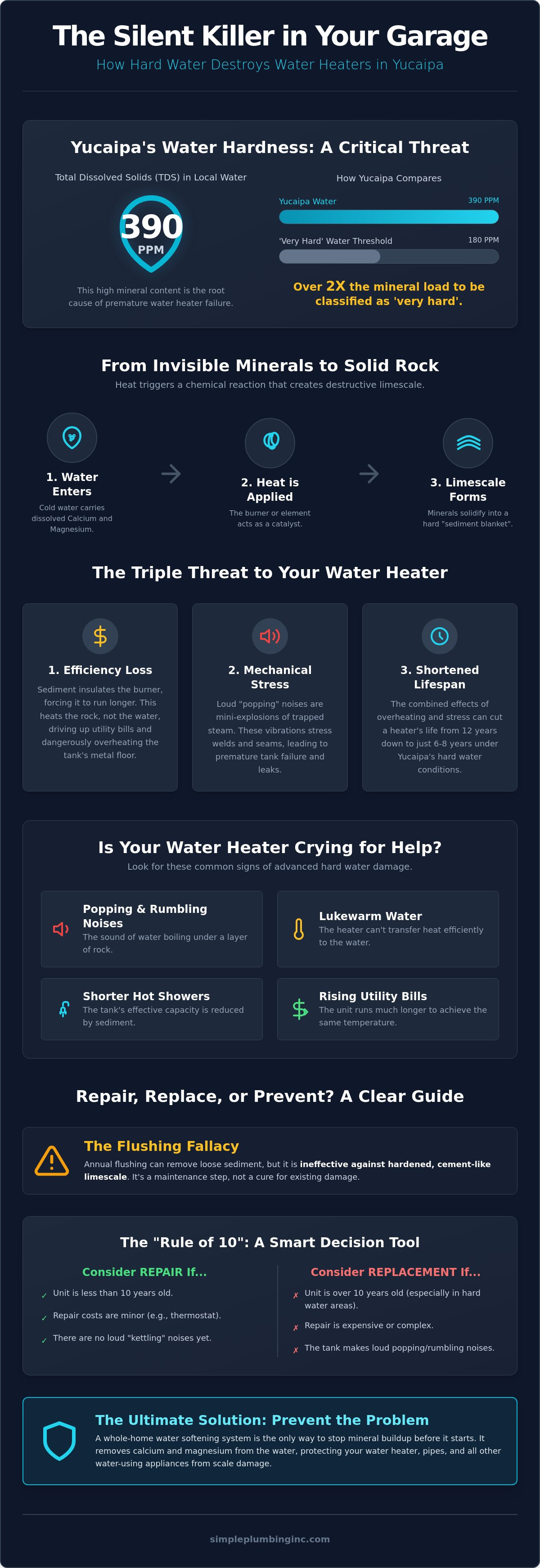
Our local water is drawn largely from groundwater sources. As rain and snowmelt soak into the earth, the water travels through layers of rock and soil, absorbing minerals along the way. This natural filtration process is why our water tastes the way it does, but it also means our water is "very hard." While the water industry considers anything over 180 parts per million (ppm) to be in the highest hardness category, the Yucaipa Valley Water District's 2025 report showed Total Dissolved Solids (TDS) levels at 390 ppm. This means our water carries more than double the mineral load required to be classified as hard. It's a local reality that every homeowner in our area has to manage.
The Chemistry of Scale Formation
The real trouble starts when that mineral-heavy water enters your water heater. Heat acts as a catalyst. When the water temperature rises, a chemical reaction called precipitation occurs. The dissolved calcium and magnesium minerals separate from the water and turn into solid crystals. These crystals settle and harden into a stony crust known as limescale. This scale coats the heating elements in electric units or piles up at the bottom of gas tanks, directly above the burner.
Limescale is a very effective thermal insulator, which is the last thing you want inside a heating appliance. Thermal conductivity is the measure of how well a material allows heat to pass through it; since mineral scale has very low conductivity, it creates a barrier that prevents heat from reaching the water efficiently. This forces the tank to run longer and get much hotter than it was designed to, leading to the eventual hard water damage water heater failure that many neighbors experience.
The 3 Ways Hard Water Destroys Your Water Heater
Hard water is not just a nuisance that leaves spots on your dishes. Inside your tank, it acts as a persistent mechanical and chemical threat. There are three specific ways that hard water damage water heater performance and longevity: loss of efficiency, mechanical stress, and accelerated corrosion. Each of these issues works in tandem to shorten the life of your unit, often cutting a standard 12-year lifespan down to just six or eight years.
The Efficiency Gap: Heating the Rock, Not the Water
In a gas water heater, the burner is located at the bottom of the tank. As minerals precipitate out of the water, they create a "sediment blanket" directly over that heat source. This layer of rock acts as a barrier. According to the U.S. Geological Survey on hard water, these solid deposits of calcium carbonate significantly reduce the efficiency of the equipment. Your burner has to run much longer to push heat through that layer of stone just to reach the water. For Yucaipa residents, this efficiency gap shows up every month as higher gas or electric bills. More dangerously, the bottom of the tank can overheat because the heat is trapped in the metal instead of transferring to the water, leading to metal fatigue and eventual tank failure.
Mechanical Failure: Popping, Rumbling, and Kettling
If you hear a loud rumbling or popping sound coming from your garage, you are hearing the sound of mechanical stress. This is often called "kettling." It happens when small pockets of water get trapped underneath the sediment layer at the bottom of the tank. As the burner heats up, that trapped water turns into steam. The "pop" you hear is a mini-explosion as the steam bubbles burst through the sediment to reach the rest of the tank. These constant vibrations and pressure changes weaken the glass lining of the tank. While a noisy heater doesn't always mean it's broken today, it is a clear sign that the internal structure is under heavy strain. If you're hearing these sounds, it's a good idea to have a local expert take an honest look at your unit's condition.
Electric water heaters face a different but equally destructive problem. The heating elements are submerged directly in the water. In a hard water environment, minerals encase these elements in a thick crust. Eventually, the element cannot dissipate heat into the water and literally "cooks" itself until it burns out. Finally, hard water accelerates the depletion of your anode rod. This rod is designed to be a "sacrificial" piece of metal that attracts corrosive elements to save the tank. When the water is heavy with minerals, the rod dissolves much faster. Once the rod is gone, the minerals and corrosive elements begin eating the steel walls of your tank from the inside out.
Signs Your Water Heater Has Hard Water Damage
While the internal buildup is often invisible, your water heater will eventually start sending you distress signals. You don't need to be a plumbing expert to spot these signs. Because the minerals accumulate slowly, you might not notice the changes day-to-day. However, once the scale reaches a certain thickness, the symptoms become impossible to ignore. Recognizing these red flags early can be the difference between a simple maintenance visit and an emergency replacement.
If you suspect your system is struggling, look for these common indicators of hard water damage water heater units typically show:
- Small, white, sand-like particles in your faucet aerators.
- A "rotten egg" or sulfur smell coming only from your hot water taps.
- Visible moisture or rust around the bottom rim of the tank.
- Hot water that appears cloudy or milky when you first fill a glass.
Visual and Auditory Red Flags
The most famous sign is the "kettling" sound we mentioned earlier. If you hear popping or rumbling coming from your garage or utility closet, your tank is likely filled with several inches of sediment. You should also pay attention to the water itself. When scale breaks loose, tiny white flakes of calcium can travel through your pipes and clog your showerhead or sink aerators. If you see a puddle forming at the base of the tank, it often means the sediment has caused the metal at the bottom to overheat and crack. This type of leak usually means the tank is no longer salvageable.
Performance Issues You’ll Notice Daily
Performance problems usually show up during your morning routine. If your showers are consistently lukewarm, your lower heating element is likely buried in a mountain of minerals. This element is responsible for keeping the bottom half of the tank hot; once it's encased in stone, it can't do its job. You might also notice that the "recovery time" for your heater has doubled. If it takes an hour for the water to get hot again after one person showers, the sediment layer is successfully blocking the heat from reaching the water. When sediment coats the internal thermostat, it causes sensor failure that leads to wildly fluctuating water temperatures.
The smell factor is another common complaint. Thick layers of mineral scale create a perfect environment for certain bacteria to thrive. These bacteria aren't usually harmful, but they produce a foul odor that can make your morning shower unpleasant. To prevent these minerals from entering your plumbing system in the first place, many Yucaipa homeowners research how water softeners work to protect their appliances. If you're noticing these daily frustrations, it's a clear sign that the hard water is winning the battle against your heater.
Prevention: From Annual Flushing to Water Softeners
Stopping the cycle of hard water damage water heater units face in Yucaipa starts with a proactive plan. Most homeowners are told to flush their tanks once a year. This process involves draining the water to clear out loose mineral sand and sediment. While flushing is a great habit, it has a major limitation. It only removes the loose "slush" at the bottom. Once minerals have calcified and bonded to the metal or heating elements, a standard flush won't budge them. It is like trying to rinse off dried cement with a garden hose. To truly protect your investment, you need to address the minerals before they ever reach the tank.
Is a Water Softener Worth the Investment?
Replacing a water heater every six to eight years is a significant and avoidable expense. When you consider that hard water also clogs your showerheads and wears out your dishwasher, the cost of a water softener installation in Yucaipa often pays for itself through appliance longevity. Beyond protecting your heater, soft water keeps your plumbing clear and your laundry soft. You'll need to decide between salt and salt-free systems based on your home's specific needs and local regulations regarding brine discharge. A softener is the only way to stop mineral buildup at the source.
The Role of the Anode Rod
Think of the anode rod as your heater's bodyguard. It is a sacrificial rod made of magnesium or aluminum that hangs inside the tank. Corrosive elements and minerals in the water attack this rod instead of the steel tank walls. In Yucaipa, our high mineral content means these rods are under constant stress. We recommend checking your anode rod every two years. If the rod is completely depleted, the tank walls are the next target for corrosion. While some homeowners feel comfortable swapping a rod themselves, it requires specific tools and a bit of muscle to break the factory seal. If you're unsure about the state of your rod, it's safer to have a professional handle the tune-up to ensure the tank remains sealed and safe.
We believe in taking a straight-shooter approach to maintenance. If you want a clear, honest assessment of your current system's health, you can schedule a straightforward inspection with our team today. We can help you determine if a simple flush and rod replacement will buy you more time or if the internal scale has already done too much damage.
The Straight-Shooter Guide: Repair or Replace?
When your heater stops performing, you are faced with a difficult choice: do you spend money on a repair or invest in a new unit? We use a "straight shooter" approach to help you decide. One helpful metric is the "Rule of 10." If your water heater is more than 10 years old, or if the cost of the repair exceeds 50 percent of the price of a new unit, replacement is usually the smarter financial move. Because hard water damage water heater tanks from the inside out, an older unit with heavy scale buildup is often a ticking time bomb. Fixing a single heating element or valve won't remove the thick layers of stone already stressing the tank's structure.
In many cases, a unit is simply "too far gone." Once the sediment has caused the internal glass lining to crack, the steel tank begins to corrode. This leads to pinhole leaks that cannot be safely patched. If you see rust in your hot water or a puddle under the heater, the structural integrity is compromised. At this stage, pouring money into repairs is like trying to fix a sinking ship. We will always tell you the truth about whether a repair is a long-term fix or just a temporary bandage.
When to Consider Water Heater Replacement
If your unit is nearing the end of its life, upgrading can actually save you money in the long run. Modern high-efficiency models are designed to be more resilient, and when paired with a softener, they can last significantly longer than the unit you are currently using. You'll see the benefits in lower utility bills and a more reliable supply of hot water for your family. You can find more details on choosing the right model in our Water Heater Replacement Yucaipa guide. The goal is to move you from a state of constant worry to a place of predictable, reliable comfort.
The Simple Plumbing Difference
As a veteran-owned company with a USMC background, we don't believe in high-pressure sales tactics. We treat every service call like a mission where the objective is to provide the most honest, transparent information possible. We prioritize educating our neighbors because we know that an informed homeowner is a happy one. We'll tell you exactly what we see, whether it's a simple fix or a necessary upgrade, without any fluff or evasion. If you're tired of the rumbling noises and lukewarm showers, it's time for a professional opinion you can trust. Schedule your hard water assessment with Simple Plumbing Inc. today and let us help you find the most logical solution for your home.
Take Control of Your Home's Hot Water
Taking care of your home shouldn't feel like a guessing game. By understanding how mineral buildup leads to hard water damage water heater failure, you can make informed decisions that save money and prevent domestic chaos. Whether it's the rumbling sounds of sediment or the frustration of a lukewarm shower, these signs are your cue to take action before a major leak occurs. You now have the tools to recognize when your system is struggling and the knowledge of how to prevent future scale buildup.
Simple Plumbing Inc is here to provide the clarity you need. As a USMC veteran-owned and operated company, we specialize in Yucaipa's specific water conditions. We don't believe in high-pressure sales or hidden fees. Instead, we offer the same honest, transparent advice we would give our own neighbors. We can help you determine if your current unit just needs a professional tune-up or if it is time to consider a more efficient replacement.
Protect your home from hard water damage—contact Simple Plumbing Inc today. You deserve a plumbing system that works as hard as you do, and we are ready to help you achieve that peace of mind.
Frequently Asked Questions
Can hard water cause my water heater to explode?
While a full explosion is extremely rare due to modern safety valves, hard water damage water heater tanks by causing the metal at the bottom to overheat and weaken. This thermal stress can lead to a sudden rupture or a messy leak in your garage. Regular maintenance ensures your safety features work correctly and your tank stays structurally sound.
How often should I flush my water heater if I have hard water in Yucaipa?
You should flush your tank at least once a year. However, because Yucaipa water has high mineral levels, doing it every six months is a safer bet. This prevents loose sediment from hardening into a solid layer of rock that a standard flush cannot remove. Frequent flushing is a simple way to keep your unit running efficiently.
Does a water softener actually extend the life of a water heater?
Yes, a water softener is the most effective way to protect your appliance. By removing calcium and magnesium before they enter the tank, you stop the scaling process entirely. This can help your heater last its full 12 to 15 year lifespan instead of failing in just six or eight years. It is a smart long-term investment for any Yucaipa home.
Why is my water heater making a popping sound?
That popping sound is called kettling. It happens when water gets trapped under a layer of sediment at the bottom of the tank. As the burner heats the water, it turns to steam and "pops" through the mineral layer. It's a clear sign that your unit is struggling with heavy buildup and needs attention.
Can I remove limescale buildup once it has already formed?
You can flush out loose sediment, but calcified scale is much harder to deal with. Once minerals have "cooked" onto the heating elements or the tank walls, they are usually there to stay. Attempting to scrape them off often does more harm than good to the internal glass lining. Prevention is always more effective than trying to reverse the damage.
Will a tankless water heater solve my hard water problems?
A tankless unit doesn't solve the problem; it actually requires more attention. The small heat exchangers in tankless models can clog quickly in hard water areas like Yucaipa. These units must be descaled with a special solution at least once a year to keep them running. Without this maintenance, a tankless unit can fail much faster than a standard tank.
How much does hard water increase my energy bills?
Hard water can increase your energy costs significantly. Because the scale acts as an insulator, your burner has to stay on longer to heat the water through the layer of rock. This means you are paying to heat the sediment before you ever heat the water. This extra run time shows up every month on your utility bills.
Is hard water damage covered by my water heater warranty?
Most manufacturer warranties do not cover hard water damage water heater units experience. They consider flushing and water treatment to be the homeowner's responsibility. If your tank fails because it was buried in minerals, the manufacturer will likely deny the claim. It is important to check your specific warranty terms to understand your coverage.


