
A pressure test checks whether a defined section of gas piping holds pressure. If the reading drops, the test alone may not show where the problem is or what caused it. If you’re searching for “gas line pressure test Yucaipa,” it helps to know what the test can establish, what it can’t, and when further assessment may be needed.
A professional may use a pressure test after gas-line work or when a concern needs investigation. The test setup and results need to be understood in context, including which section was tested and why. This guide explains how pressure testing differs from gas leak detection, what to expect during an assessment, and how to prepare. Simple Plumbing Inc. is based in Yucaipa and provides gas leak detection and repair for residential and commercial customers.
Key Takeaways
- A pressure test checks whether a defined section of gas piping holds pressure under test conditions. A pressure drop may call for further assessment, but it does not necessarily pinpoint the cause.
- Testing may be considered after gas-line work or when a leak is suspected. The appropriate setup depends on the piping and applicable requirements.
- A pressure test and gas leak detection answer different questions: one evaluates pressure behavior in a tested section, while the other investigates a suspected leak.
- Before an assessment, note symptoms, recent gas-line work, affected appliances, and where the relevant piping or connections can be accessed.
- Simple Plumbing Inc. provides gas leak detection and repair in Yucaipa and can explain findings and appropriate next steps.
Gas Line Pressure Testing in Yucaipa: What It Checks and Why
A professional pressure test checks whether a defined section of gas piping maintains pressure under specific test conditions. The professional identifies the section to be assessed, uses an appropriate test setup, and observes the pressure. The scope is that piping section, not automatically every appliance or gas line on the property. If you’re researching a gas line pressure test Yucaipa, clarifying the scope is a practical first step.
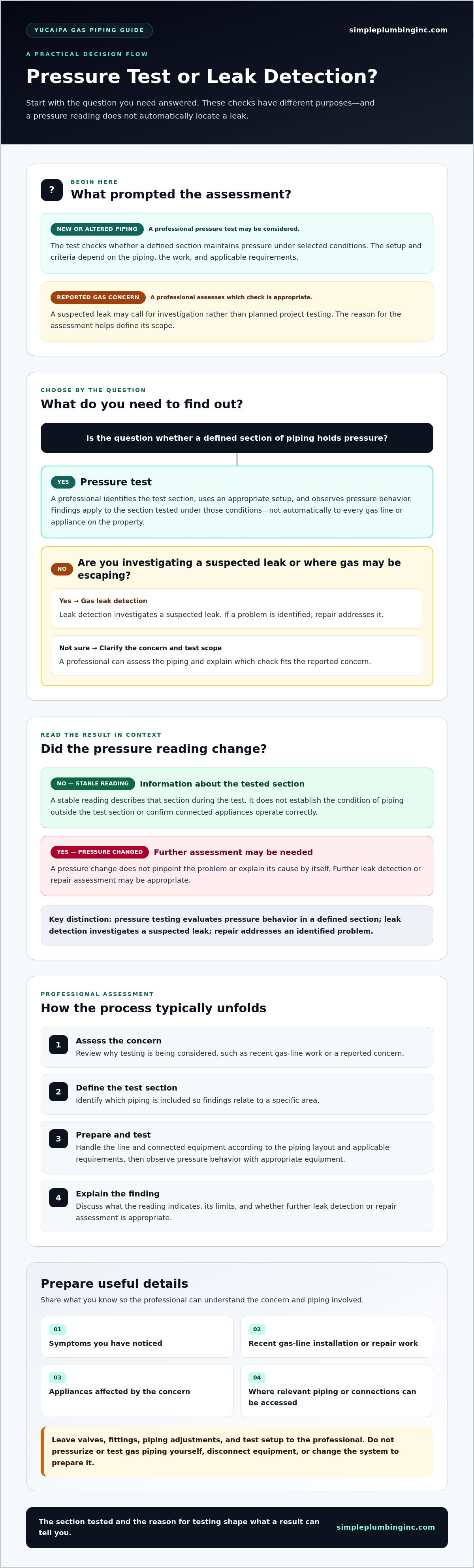
A pressure test checks whether a tested section holds pressure; leak detection investigates where gas may be escaping, and repair addresses the identified problem. A pressure change can mean the section needs further assessment, but it does not identify the precise location or explain the cause by itself. For general background on gas leaks and detection, see this overview of a gas leak.
Testing may be considered after new gas piping is installed, existing piping is altered, or a leak is suspected. In Yucaipa, applicable requirements and test criteria depend on the project and current rules. A gas line pressure test Yucaipa should be planned around the piping layout and purpose of the assessment, not a generic figure found online. Test pressure, duration, and acceptance criteria depend on the specific work and applicable requirements.
When might a Yucaipa gas line need testing?
New gas piping or changes to an existing line may require verification as part of the work, subject to applicable requirements. A reported gas concern can also prompt professional assessment, though it may call for a different response than planned project testing. Don’t try to pressurize or test gas piping yourself. A professional can assess the concern and determine what check is appropriate. The reason for testing helps define the assessment.
What a pressure test can, and cannot, tell you
A stable reading provides information about the tested section under the conditions used. It does not establish the condition of piping outside that section, confirm that connected appliances operate correctly, or explain every gas-related symptom. If pressure changes, further investigation may be needed to locate the issue. Treat the result as one part of an assessment, not as a location map or a repair decision on its own.
- The section matters: Findings apply to the piping included in the test, not automatically to every gas line in the home.
- The setup matters: Piping arrangement, connected equipment, and applicable requirements shape how a professional defines and tests a section.
- The result guides next steps: A pressure change may lead to additional leak detection or repair assessment, but does not identify the cause on its own.
When reviewing a result, ask which piping section was tested and what the reading means under those conditions. Simple Plumbing Inc. provides gas leak detection and repair in Yucaipa, helping homeowners understand findings and consider a next step based on the concern rather than on a single reading.
How a Professional Gas Line Pressure Test Works
A professional assessment starts by understanding the concern and defining the piping section. The professional then prepares the system, performs the appropriate check, and explains what the findings mean. This sequence helps connect the test to the specific concern instead of treating every piping system as the same.
Test conditions are selected for the specific piping, connected equipment, and applicable requirements. Test pressure, duration, and acceptance criteria can vary with the work and rules in force. For a gas line pressure test in Yucaipa, the setup should account for applicable California and local requirements rather than rely on a generic figure. The Pipeline and Hazardous Materials Safety Administration (PHMSA) provides federal pipeline safety information; requirements for a home piping project need to be considered in that project’s context.
- Assess the concern. The professional reviews why testing is being considered, such as recent gas-line work or a reported concern.
- Define the test section. The piping included in the assessment is identified so the findings relate to a specific area.
- Prepare and test. The line and connected equipment are handled according to the piping layout and applicable requirements, then pressure behavior is observed with appropriate equipment.
- Explain the result. The professional describes what the reading indicates and whether further leak detection or repair assessment is appropriate.
Assessment and preparation before testing
Before setup, the professional needs to understand the reported issue and the piping involved. Mention recent installation or repair work, affected appliances, and any symptoms you’ve noticed. This history can help define the assessment. Connected appliances and branching lines affect how the system can be safely isolated. Leave valves, fittings, and piping adjustments to the professional. Don’t disconnect equipment or change anything to prepare the line yourself.
Taking and explaining the test result
During the test, the professional observes the pressure reading under the selected conditions. A stable reading provides information about the defined section during that test. A changing reading may signal that more investigation is needed, but it does not automatically reveal the location or cause. The professional should explain the limits of the finding, how it relates to your concern, and what diagnostic or repair step makes sense next.
Useful questions include: Which section was tested? What does the reading suggest? Does it call for further assessment? Those details help you make a practical decision without guessing from a number alone. For a gas-line concern in Yucaipa, Simple Plumbing’s gas leak detection and repair support can help you understand the assessment and discuss an appropriate next step.
Pressure Test vs. Gas Leak Detection: Which Answers Your Question?
Both procedures help assess gas piping, but they answer different questions. A pressure test checks whether a defined section holds pressure under selected conditions. Gas leak detection investigates a suspected leak and helps assess where attention may be needed. Neither procedure is a repair by itself.
The distinction matters if you’ve had a gas line pressure test in Yucaipa and the result raises questions. A changing reading does not point to a specific fitting or pipe location. The NFPA 54, National Fuel Gas Code covers fuel gas piping guidance, including installation and testing. Requirements for a particular project depend on its circumstances and governing rules.
- Pressure test purpose: Evaluate whether the defined piping section holds pressure under test conditions. The finding describes pressure behavior in that section; the next step depends on the result and reason for testing.
- Gas leak detection purpose: Investigate a suspected leak using methods suited to the concern. The symptoms and area being assessed help define the scope. Findings can guide further evaluation or repair.
- Repair purpose: Address an identified gas-line problem. The work depends on what the assessment reveals and where the concern is located. A test or detection finding informs the decision but does not complete the repair.
What does a pressure drop mean?
A changing reading needs professional interpretation. On its own, it does not establish that there is a leak, show where one might be, or explain the cause or severity. Test connections, setup, piping configuration, and other conditions affect how the reading is understood. The professional can review those conditions and determine whether additional assessment is needed before drawing conclusions.
Don’t treat one number as a stand-alone diagnosis. Ask which section was tested, what conditions were used, and what the reading does and does not indicate. This context helps clarify whether further investigation is warranted.
When does leak detection or repair enter the picture?
The next step depends on the test findings, reported symptoms, and location of the concern. If a test suggests that the section needs more investigation, professional gas leak detection can help assess the issue. If a problem is identified, repair decisions should follow from that assessment rather than from the pressure reading alone.
For example, a pressure test may show that a section does not maintain pressure, while detection work investigates the concern further. If the initial assessment does not point to a problem in that section, the reported symptoms may still need separate attention. A plumber can explain how the findings relate to the concern and discuss a sensible next step. Keeping testing, diagnosis, and repair distinct makes it easier to understand what each stage has established.
Preparing for a Gas Line Pressure Test in Yucaipa
A little preparation can help the professional understand what prompted the assessment. You don’t need to inspect or adjust the gas piping yourself. For a gas line pressure test in Yucaipa, the professional determines safe access, isolation, and test scope based on the system and applicable requirements. The result may lead to further evaluation or repair, but it can’t be predicted in advance.
What to share and have ready
Think about when you first noticed the concern and where it seems strongest. Note whether it began after appliance work, whether one appliance is affected, or whether you noticed an odor in a particular area. Share relevant details even if you’re unsure whether they’re connected.
- Symptoms: Record what you noticed, when it started, and where it seems most noticeable.
- Recent work: Mention gas-piping changes, appliance installation, or repairs that may help explain the timeline.
- Affected appliances: Identify which appliances seem involved and whether the concern affects more than one.
- Access points: Note where gas piping, connections, or the affected appliance can be reached. Keep the area clear if it’s safe to do so.
Leave gas equipment, valves, and connections untouched. The professional will decide how to access and isolate the relevant section safely. If the assessment shows that more investigation is needed, the next step may involve further evaluation or a repair discussion. Simple Plumbing Inc. provides gas leak detection and repair for local residential and commercial customers. For a non-emergency concern, get help with gas leak detection and share what you’ve observed.
What to do if you smell gas
If you smell gas, don’t wait for a scheduled pressure test. Leave the area and avoid actions that could create an ignition source, including operating switches, lighting flames, or using equipment nearby. Once you’re in a safe location, call 911 or the gas utility. Don’t re-enter or try to locate the source yourself. A possible gas emergency needs an urgent response, not a routine plumbing appointment.
For a planned assessment, your notes provide useful context, but the professional determines the test setup and what the findings mean. You can ask which area will be assessed and what possible next steps might follow. A clear explanation helps you understand whether the test answers the original concern or whether additional leak detection or repair evaluation is appropriate.
Gas Line Pressure Test and Repair Support from Simple Plumbing in Yucaipa
A gas-line concern can leave you wondering whether you need testing, leak detection, a repair, or a combination of steps. Simple Plumbing Inc. provides gas leak detection and repair for residential and commercial customers in Yucaipa. The right next step depends on the reported concern and assessment findings, rather than treating every situation as the same problem.
A clear path from concern to next step
Start by describing what you noticed, when it began, and whether recent work or an appliance seems related. The gas line can then be assessed in context. A pressure test may provide information about a defined piping section, while leak detection investigates a suspected leak. Findings help shape the next step, but neither a reading nor a suspicion alone should determine a repair.
Simple Plumbing Inc. provides gas leak detection and repair and can explain how the findings relate to the reported issue. If more evaluation is appropriate, the next step should reflect the assessment and piping involved. If repair is indicated, the discussion can focus on the identified issue and the work needed to address it. The aim is to clarify what is known, what still needs attention, and why a next step makes sense.
- Explain the concern: Describe the symptoms, timeline, and any recent gas-line or appliance work.
- Assess the gas line: The assessment is shaped by the concern and the piping involved.
- Review the findings: Understand what the assessment can and cannot establish.
- Discuss next steps: Consider detection or repair options that fit the findings and system.
Local gas leak detection and repair in Yucaipa
Simple Plumbing Inc. is based in Yucaipa and provides residential and commercial plumbing services. It is veteran-owned and operated by a U.S. Marine Corps veteran. For homeowners and businesses, a local plumbing company can assess gas-line concerns, explain the findings, and discuss an appropriate next step.
If you’re researching a gas line pressure test in Yucaipa, remember that a test is one part of understanding the concern. It can help assess how a defined section responds under test conditions, while detection and repair address different questions. Understanding the scope and findings helps avoid assuming that a single result says more than it does.
To discuss a gas-line concern, contact Simple Plumbing Inc about gas-line concerns.
Take the Next Step With a Clear Plan
A gas-line concern is easier to address when you know what question needs answering. If you’re considering a gas line pressure test in Yucaipa, share what you’ve noticed and let the assessment guide the next decision. You don’t have to interpret a pressure reading or decide on repairs alone.
Simple Plumbing Inc. is a Yucaipa-based plumbing company, veteran-owned and operated by a U.S. Marine Corps veteran. Its gas leak detection and repair services can help you move from concern to a better-informed next step, with an explanation grounded in the specific issue.
Contact Simple Plumbing Inc about gas-line concerns to discuss your situation.
Frequently Asked Questions
Is a gas line pressure test the same as a gas leak test?
No. A pressure test checks how a selected piping section behaves under test conditions, while leak detection investigates a suspected leak using methods suited to the concern. A pressure test may show that a section needs more evaluation, but it won’t necessarily reveal the exact spot. The right next step depends on why the assessment is being done and what the findings show.
What should I do if I smell gas before a scheduled pressure test?
Leave the area immediately and get to a safe location. Don’t operate switches, light flames, or use anything that could create an ignition source. From outside and away from the suspected area, call 911 or the gas utility. Don’t wait for the appointment, try to find the leak, or re-enter to collect belongings. A planned plumbing assessment isn’t a substitute for an urgent safety response.
How long does a gas line pressure test take?
There isn’t one reliable time estimate for every test. Search results for “gas line pressure test Yucaipa” may not reflect the time a specific assessment needs. An appointment can include reviewing the concern, preparing the relevant section, and explaining the result. Piping layout, connected equipment, test requirements, and any need for additional evaluation can affect the visit. Ask for an estimate based on your setup.
Can a pressure test damage gas appliances?
A test setup should account for connected appliances and protect equipment from conditions it isn’t intended to experience. The professional determines whether appliances or parts of the piping need to be isolated for the specific test. Don’t disconnect an appliance or adjust a gas valve to prepare for the visit. If you’re concerned about a particular appliance, point it out before testing so it can be considered in the setup.
What happens if a gas line pressure test does not hold?
If the tested section doesn’t maintain pressure under the chosen conditions, the result needs professional interpretation and may lead to further investigation. It doesn’t identify the exact leak location or prove what caused the reading. The professional can review the setup and findings, then determine whether gas leak detection or repair assessment is appropriate. Don’t use the result alone to decide which pipe or connection needs work.
How much does a gas line pressure test cost in Yucaipa?
There isn’t a single price that applies to every job. A search for “gas line pressure test Yucaipa” can bring up general estimates, but the work involved depends on the piping and assessment. A defined section of accessible piping may require a different scope from a situation that also needs diagnosis or repair. When discussing your situation with Simple Plumbing Inc., share the reason for the assessment and any relevant work history.


