
Imagine finally finding the perfect professional-grade gas range for your kitchen, only to realize the gas connection is several feet away or missing entirely. It's a common hurdle that quickly turns excitement into worry about potential leaks or the complexity of cutting into finished walls. Scheduling a gas line installation for stove Yucaipa homes shouldn't be a source of stress. We understand that the technical details of gas plumbing can feel overwhelming, especially when you're balancing safety concerns with the reality of your home's layout. You want an upgrade that works perfectly without compromising your family's security.
You deserve a straightforward plan that keeps your home compliant with San Bernardino County codes without any hidden surprises. This guide covers everything you need to know about safely installing or extending a gas line for your new stove in Yucaipa, CA. We'll walk you through the permitting process, explain how lines are run through existing structures, and provide professional tips on proper stove placement and ventilation. By the time you're done reading, you'll have the clarity needed to move forward with confidence and achieve a safe, leak-free kitchen setup.
Key Takeaways
- Professional installation ensures your home stays safe and complies with San Bernardino County codes where DIY gas work is prohibited.
- Discover how to calculate BTU requirements so your high-performance stove receives the consistent fuel flow it needs to function.
- Learn the essential steps for a successful gas line installation for stove Yucaipa projects, from the initial site inspection to final city permits.
- Find out what is involved in converting from electric to gas, including why your new range still requires a standard 120V electrical outlet.
- Understand why a straight-shooter approach from a local, veteran-owned specialist makes the gas plumbing process simple and predictable.
Why Professional Gas Line Installation for Stoves Matters in Yucaipa
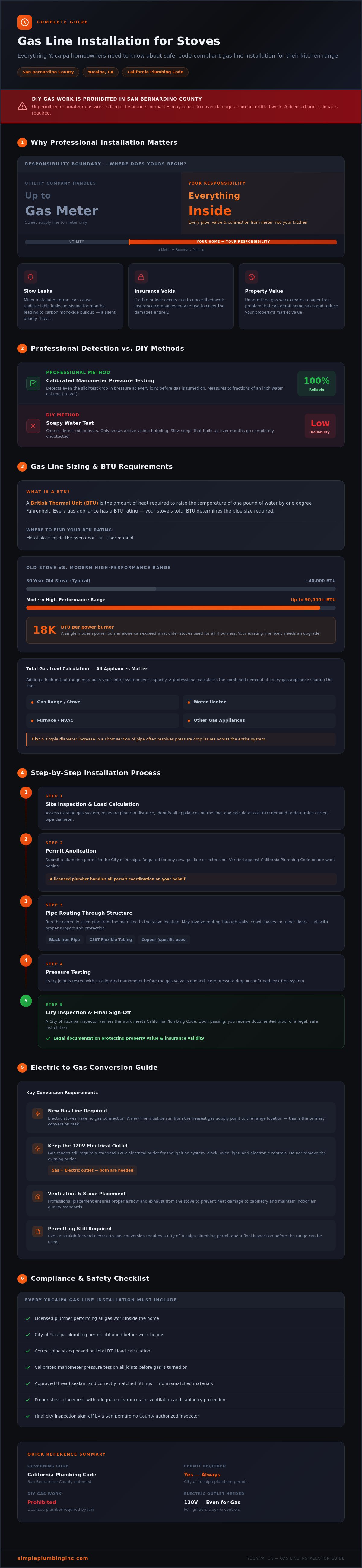
When you plan a gas line installation for stove Yucaipa projects, it's easy to assume your utility company handles the heavy lifting. In reality, utility providers only maintain the lines up to your gas meter. Every pipe, valve, and connection from that meter into your kitchen is the homeowner's responsibility. This distinction is critical because interior gas plumbing carries high stakes. A professional installation ensures these private lines are durable, correctly sized, and entirely leak-free. We take a straight-shooter approach to your home's safety, providing honest assessments without the fluff.
Choosing a professional isn't just about convenience; it's about protecting your biggest investment. Licensed plumbers bring a level of precision that DIY attempts simply can't match. In San Bernardino County, unpermitted or amateur gas work is often illegal for good reason. Professional sign-offs provide a paper trail of safety that protects your property value and keeps your home insurance valid. If a fire or leak occurs due to uncertified work, insurance companies may refuse to cover the damages. It's much better to have the job done right the first time by a steady, experienced voice in the industry.
The Danger of Improper Gas Connections
Gas safety is about more than avoiding a sudden flame. Minor errors during installation can lead to slow, undetectable leaks that persist for months. These slow leaks increase the risk of carbon monoxide buildup, which is a silent but deadly threat to your family. We use specialized pressure testing equipment to verify that every joint is sealed tight before the gas is ever turned on. You can't find that kind of certainty in a toolbox from a big-box store.
- Specialized Tools: We use calibrated manometers to detect even the slightest drop in pressure that a soapy water test might miss.
- Correct Materials: Using the wrong thread sealant or mismatched fittings can cause the metal to corrode or the seal to fail over time.
- Ventilation Awareness: A professional ensures your stove is placed in a way that allows for proper airflow and exhaust, preventing heat damage to your cabinetry.
Compliance with Yucaipa Building Standards
Local building codes in Yucaipa are designed to keep neighborhoods safe. When you add a new gas line or extend an existing one, the City of Yucaipa typically requires a plumbing permit. This process involves an inspection from a city official who verifies the work meets the California Plumbing Code. We handle the technical details and the coordination with local inspectors so you don't have to worry about red tape. Following these rules ensures your gas line installation for stove Yucaipa is documented, legal, and safe for your family.
Understanding Gas Line Sizing and Material Standards
A successful gas line installation for stove Yucaipa homes depends on more than just making a connection. It requires precise math to ensure your new appliance receives the right amount of fuel. If the pipe is too small, your stove won't perform as the manufacturer intended. You might notice weak flames or burners that take forever to boil water. Getting the sizing right from the start prevents these frustrations and keeps your system operating within safe pressure limits. We believe in getting the technical details right so you don't have to worry about them later.
Calculating the total load on your gas system is a standard part of our process. We don't just look at the stove. We look at the water heater, furnace, and any other gas appliances sharing the line. Adding a high-output range might push your system over its capacity. This leads to pressure drops that affect every appliance in the house. A simple diameter increase in a short section of pipe often solves these issues, ensuring your kitchen remains the heart of a well-functioning home.
BTU Ratings and Your Stove
Every gas appliance has a specific heat output measured in British Thermal Units. In the context of residential gas supply, a BTU is the amount of heat needed to raise the temperature of one pound of water by one degree Fahrenheit. You can usually find the total BTU rating for your range on a metal plate located inside the oven door or in the user manual. Modern high-performance stoves often feature power burners that demand significantly more gas than older models. If your existing line was sized for a 30 year old stove, it likely needs an upgrade to support a modern unit with 18,000 BTU burners.
Choosing the Right Piping Materials
Selecting the right material is just as important as the size of the pipe. We typically use two main types of piping for residential gas work in Yucaipa. Black iron pipe is the industry standard for permanent, rigid installations. It is incredibly durable and resistant to damage, making it ideal for main runs through crawlspaces or attics. Its rigidity makes it difficult to install in tight, finished kitchens without removing large sections of drywall.
Corrugated Stainless Steel Tubing (CSST) offers a flexible alternative. This material can be snaked through existing walls much like electrical wiring. This often reduces the labor needed for a gas line installation for stove Yucaipa. While CSST is faster to install, it must be properly bonded and grounded to prevent damage from electrical surges. We ensure every material used is specifically rated for residential natural gas to maintain the integrity of your home's infrastructure. If you're unsure if your current pipes are up to the task, scheduling a professional inspection can provide the clarity you need before your new stove arrives.
The Step-by-Step Process of Installing a Gas Line for Your Range
Every successful gas line installation for stove Yucaipa projects starts with a clear, logical plan. We begin with a thorough site inspection to map out the most efficient path through your walls, floors, or crawlspace. This isn't just about finding the shortest distance. It's about ensuring the new line integrates perfectly with your existing plumbing without causing pressure drops elsewhere. Once we've calculated the total gas load, we handle the permitting process with the City of Yucaipa. This documentation is essential for your peace of mind and your home's future resale value. If the installation requires any exterior work, we also coordinate with 811 to mark underground utility lines before a single shovel hits the dirt.
The physical installation begins by shutting off the main gas supply to your home. We then tap into the existing gas manifold or a primary trunk line to create a dedicated branch for your kitchen. We run the new pipe, whether it's rigid black iron or flexible tubing, and secure it with heavy-duty hangers to prevent vibration or sagging. The process follows a specific order of operations:
- Manifold Access: Identifying the best point to draw fuel without overtaxing the system.
- Pipe Fitting: Cutting and threading pipes to exact measurements for a custom fit.
- Valve Installation: Placing a dedicated gas shut-off valve within easy reach behind the stove.
- Securing Connections: Tightening every fitting to industry torque standards to prevent future loosening.
Safety Checks and Pressure Testing
We don't guess when it comes to your family's safety. After the line is run, we use a manometer to perform a high-precision pressure test. This tool detects tiny leaks that are invisible to the naked eye. We also perform a "bubble test" on every new fitting and use electronic detectors to sniff out any stray gas molecules. The final shut-off valve is installed in a specific, easily reachable spot behind the stove. If you ever need to move the appliance, you won't have to hunt for the handle.
Final Connection and Appliance Calibration
The last step is the physical connection to your stove using a high-quality, flexible stainless steel connector. We don't just hook it up and walk away. We ignite every burner and the oven to check for a steady, crisp blue flame. A yellow or flickering flame signals a problem with the gas-to-air ratio, which we calibrate on the spot. Finally, we provide a walkthrough of your new setup. You'll know exactly how the system works and how to use the safety features. This ensures your gas line installation for stove Yucaipa is not just functional, but completely predictable.
Electric to Gas Conversion Guide for Yucaipa
Switching from an electric range to a gas model is one of the most rewarding kitchen upgrades you can make. The transition requires a bit of planning beyond just buying a new appliance. You need to evaluate your kitchen layout to determine where the new piping will enter the room. This process often involves more than just the gas line installation for stove Yucaipa homeowners expect. You also have to consider the existing electrical setup. Precision matters here. While a gas stove burns fuel for heat, it still requires a standard 120V outlet to power the electronic igniters, clocks, and oven lights. Most electric stoves use a heavy-duty 240V outlet that isn't compatible with a gas range's plug.
Your ventilation system also needs a second look. Gas burners produce more ambient heat and combustion byproducts than electric coils. If your current range hood was designed for a basic electric setup, it might not have the CFM (cubic feet per minute) rating to handle a high-output gas range. Upgrading your ventilation ensures your kitchen stays cool and your air remains clear. While the initial conversion involves several steps, the long-term benefits of precision cooking and lower energy costs usually outweigh the setup effort.
Infrastructure Requirements for Conversion
Before we start the physical work, we verify that your gas meter has the capacity to handle an additional appliance. If your home already has a gas furnace and water heater, the meter is likely sized correctly, but it's a step we never skip. We also handle the safe cap-off of your old 240V electric circuit. This prevents electrical hazards behind your new stove. Most homes in our area use natural gas, but if you're in a more rural part of the Inland Empire, we can help you identify if a propane conversion kit is necessary for your specific model.
The Impact on Your Daily Cooking
Chefs prefer gas for a simple reason: instant control. When you turn the dial, the heat changes immediately. There's no waiting for a coil to cool down or warm up. This efficiency makes a big difference in a busy household. Pair this upgrade with other home improvements, like hard water solutions in Yucaipa CA, to keep your kitchen running at peak performance. Reliable appliances and clean water systems work together to make your daily chores easier. To keep your new range in top shape, we recommend cleaning the burner ports regularly to ensure a steady, even flame. If you're ready to make the switch, contact us for an honest assessment of your kitchen's conversion needs.
Reliable Gas Line Services: The Simple Plumbing Difference
Choosing the right team for your gas line installation for stove Yucaipa projects matters. You need more than just a plumber; you need a specialist who understands the high stakes of residential gas work. We've built our reputation in Yucaipa and the Inland Empire by being a steady, experienced voice for homeowners. While big utility companies focus on the infrastructure outside your home, we focus on the safety and reliability of everything inside your walls. Our approach is built on clarity and honesty. You won't find high-pressure sales tactics here, just straightforward solutions for your kitchen upgrade.
Safety isn't a one-time check for us. It's an ongoing commitment to your home's integrity. That's why we often combine our installation services with comprehensive leak detection in Yucaipa CA. This holistic view ensures that your new stove connection is secure and that your entire system is protected from potential hazards. We provide transparent pricing from the start. You'll know exactly what to expect before we ever turn off your gas supply or cut into a wall.
The Veteran-Owned Advantage
Simple Plumbing Inc is owned and operated by a U.S. Marine Corps veteran. This military background shapes every aspect of how we handle your home. Discipline translates to meticulous safety standards, and integrity means we're straight shooters. If you don't need a specific repair or upgrade, we'll tell you. Our "no-fluff" promise means you get honest answers about your plumbing needs without any evasion. When you work with us, you're supporting a local business that truly values the Yucaipa community and its safety.
Get Started with Your Stove Installation
Ready to bring your new gas range to life? The first step is a simple site assessment to plan your gas line installation for stove Yucaipa. We'll look at your current gas load and evaluate the path for the new line to ensure everything is up to code. To prepare for installation day, make sure your kitchen area is clear of clutter and you have your stove's manual ready for our team. We'll handle the technical details, from city permits to the final flame test, so you can focus on enjoying your new kitchen. Schedule your gas line installation with Simple Plumbing Inc today.
Ready to Upgrade Your Kitchen with Confidence?
Upgrading your kitchen with a new gas range is a significant step toward better cooking and improved home efficiency. You now understand that a safe installation requires more than just a simple connection; it demands precise BTU calculations and strict adherence to local Yucaipa building codes. Choosing professional support ensures your home remains protected from slow leaks while your appliance performs exactly as the manufacturer intended. Our team at Simple Plumbing Inc brings military discipline and deep local expertise to every project. As a veteran-owned and operated company, we pride ourselves on being expert gas leak detection specialists who provide honest, no-fluff answers to your plumbing questions.
We've spent years proudly serving Yucaipa and the Inland Empire with reliable, transparent service. When you're ready to finalize your gas line installation for stove Yucaipa, we're here to make the process predictable and stress-free. Get a Straightforward Quote for Your Gas Line Installation and take the first step toward a safer kitchen. We look forward to helping you create a functional and secure heart for your home.
Frequently Asked Questions
Do I need a permit for a gas line installation in Yucaipa?
Yes, you generally need a permit for a gas line installation for stove Yucaipa projects. The City of Yucaipa requires these permits to ensure all work meets the California Plumbing Code. This process includes a final inspection by a city official to verify that the connections are safe. We handle the paperwork and coordination with the building department to make this step easy for you.
How much does it cost to run a gas line for a stove?
The cost of running a gas line depends on several factors, such as the distance from the main manifold and the difficulty of accessing your kitchen walls. A simple extension is different from a full conversion that requires new trunk lines. We provide clear, itemized assessments after an on-site visit. This ensures you understand the scope of work without any hidden fees or surprises at the end.
Can a plumber install a gas line for a stove, or do I need the gas company?
A licensed plumber is the right professional for installing interior gas lines. While the gas company maintains the infrastructure up to your meter, everything inside the home is the homeowner's responsibility. We specialize in residential gas plumbing and ensure your new stove connection is secure and code-compliant. This allows you to bypass the long wait times often associated with utility company scheduling.
What happens if I smell gas after a new stove installation?
If you smell gas, you should immediately shut off the main gas supply and leave your home. Don't use any electronics or light any flames. Once you're in a safe location, call your gas provider or emergency services. While a professional installation includes rigorous pressure testing to prevent this, you should always take the "rotten egg" smell seriously to protect your family and property.
How long does it take to install a new gas line for a kitchen range?
Most gas line installations are completed within a few hours to a full day. The timeline depends on how easily we can access your home's existing gas system and the path to the kitchen. If we can run the line through a crawlspace or attic, the job moves quickly. We prioritize efficiency to minimize the time your gas service is turned off during the installation process.
Is black iron or flexible CSST better for a stove gas line?
Both materials have specific benefits depending on your home's layout. Black iron pipe is the traditional, rigid choice for straight runs and offers extreme durability. Flexible CSST is often better for snaking through finished walls where rigid pipe would require extensive drywall removal. We evaluate your specific kitchen setup to recommend the material that provides the best balance of safety and ease of installation.
Can I convert my electric stove outlet to a gas line easily?
Converting an electric stove involves installing a completely new gas line and modifying your electrical outlet. Your new gas range will still need a standard 120V outlet for its electronic components. We can manage the gas line installation for stove Yucaipa conversions while ensuring your old 240V electric circuit is safely capped off. It's a manageable process that significantly improves your cooking experience.
What is the standard BTU for a residential gas stove?
A standard residential gas stove typically ranges from 40,000 to 65,000 total BTUs. Individual burners usually vary between 5,000 and 18,000 BTUs each. High-performance models may have much higher requirements. We check these ratings against your existing gas system capacity to ensure your new stove receives enough fuel to operate every burner and the oven at the same time without losing pressure.


