
What if the spots on your fixtures and stubborn soap scum point to a water problem a softener can address? If cleaning takes extra effort or soap and detergent don’t seem to work as well as they should, you may be wondering about the benefits of a water softener system. The key is whether your home’s water hardness matches the problems you’re seeing. A softener can reduce calcium and magnesium, the minerals that cause hard water, but it won’t solve every water concern.
This guide explains what a softener may improve around your home, including mineral scale and soap performance, and what it does not do, such as remove other contaminants. It also explains why testing your water is a practical first step before deciding whether an installed system fits your needs. Water conditions can vary, so a test gives you a clearer basis for that decision than spots alone. Simple Plumbing Inc. installs water softener systems in Yucaipa, helping homeowners connect what they learn about their water to a practical next step.
Key Takeaways
- The benefits of a water softener system are most relevant when measured hardness aligns with recurring scale, mineral spots, or soap issues.
- A traditional softener reduces calcium and magnesium in treated water, but it isn’t a filter for other substances.
- Compare the problems you notice with what a softener can reasonably improve before deciding whether it fits your home.
- Identify your water source and review applicable utility information, then test hardness to better understand what’s causing the issue.
- If a softener seems like a good fit, plan for your household’s water use and plumbing layout.
Benefits of a Water Softener System: What Changes at Home?
Hard water contains dissolved minerals, especially calcium and magnesium. As water dries, these minerals can leave deposits on surfaces and build up over time. A water softener is designed to reduce hardness minerals in treated water, which may make everyday cleaning and upkeep easier.
Water softening reduces hardness minerals in water; it does not, by itself, purify or disinfect it. For an overview of the process and its chemistry, see How a Water Softener Works.
How hard water shows up in everyday routines
Mineral spots on dishes, faucets, or shower doors may be signs of hard water. You might also notice stubborn residue after cleaning or scale around water-using fixtures. These deposits can make routine upkeep feel repetitive: you wipe away the marks, then they return as water evaporates.
These signs can suggest hardness, but they don’t tell you how hard your water is. Soap residue and spots can have other causes, too. Testing measures hardness more reliably than appearance alone.
Which household benefits can a softener support?
When hardness contributes to recurring deposits, reducing minerals in treated water may mean less scale on fixtures and less buildup to scrub away. Soap may also lather more readily, making washing and cleaning feel more straightforward. The practical difference depends on the water’s hardness, how the system is set up, and how much water your household uses.
Some people describe their skin or hair as feeling softer after switching to softened water. That’s a possible personal experience, not a health outcome or a result everyone should expect. The benefits of a water softener system are most relevant when measured hardness lines up with the scale and cleaning issues you’re noticing. If those concerns are limited, the change may be less noticeable. A water test helps set realistic expectations before you consider a system.
How a Water Softener Works, and What It Does Not Remove
A conventional water softener treats hardness, not every possible water-quality issue. It uses ion exchange to reduce calcium and magnesium in the water passing through it. Those minerals contribute to hardness, as explained in the U.S. Geological Survey’s overview of water hardness and its effects.
Water softening reduces hardness minerals; water purification is a broader goal that requires treatment designed for specific water-quality concerns. This distinction helps you choose treatment based on the issue you want to address, rather than expecting one system to do everything.
What happens inside a conventional water softener?
Water flows through a tank containing resin beads. The beads hold sodium or potassium ions and exchange them for calcium and magnesium ions in the water. In simple terms, the system trades hardness minerals for other ions, reducing hardness in the treated water.
Over time, the resin collects hardness minerals and needs to be restored. A process called regeneration rinses the resin so it can continue exchanging ions. The exact setup and operation depend on the system, so its capacity or regeneration schedule should not be assumed without considering the equipment.
Does softened water solve every water-quality concern?
No. A softener is designed to address hardness. It isn’t a general-purpose filter, and softening alone doesn’t mean every contaminant has been removed. Whether water needs other treatment depends on which concerns have been identified and what technology is suited to address them.
Filtration systems work in different ways, and what they target depends on their design. If you have concerns beyond scale or mineral deposits, testing and reviewing relevant water-quality information can help identify the issue. Softened water isn’t automatically safer or healthier to drink; its specific benefit is reducing hardness minerals.
Knowing the difference keeps expectations realistic. The benefits of a water softener system relate to hard-water effects, while other concerns may call for separate assessment and treatment. If you’re considering a system for your home, water softener installation in Yucaipa is a practical next step after identifying the issue you want to address.
Are Water Softener Benefits Worth It? Match the System to Your Needs
A softener isn’t automatically necessary in every home. It’s more worth considering when recurring scale or mineral spots make cleaning and upkeep harder, and a hardness test confirms that minerals are part of the problem. If you rarely see these issues, the day-to-day difference may be less meaningful.
The practical benefits of a water softener system depend on the concern you want to address. Penn State Extension’s guide to water softening describes common household effects, including scale buildup and soap performance. Treat these as possible outcomes, not guarantees for every home.
Which signs make a softener worth considering?
Look for recurring patterns rather than a single spot or cleaning frustration. Scale that returns on fixtures, mineral marks on dishes, or buildup around water-using equipment may make hardness worth investigating. Soap that seems less effective and extra effort spent cleaning can be clues, but they don’t measure hardness by themselves. Confirming the water’s hardness before selecting equipment helps set reasonable expectations.
| Observed issue | Possible hardness connection | Reasonable expectation |
|---|---|---|
| Scale keeps returning on fixtures | Hardness minerals may be leaving deposits as water dries | Reducing hardness may help limit new mineral buildup |
| Mineral spots on dishes | Hard water may contribute to residue | Results depend on the water and household use |
| Soap seems less effective | Hardness can affect soap performance | Softened water may help soap lather more readily |
| No recurring scale or spotting | Hardness may not be a noticeable household problem | A softener may offer less practical value |
When might another water treatment approach be needed?
Taste, odor, or other water-quality concerns aren’t the same as mineral hardness. A softener should not be assumed to address them. If you notice an issue beyond scale or spotting, identify and evaluate that concern separately. Filtration and other treatment methods target different substances depending on their design.
Also factor in upkeep. Salt-based systems require attention to their salt supply, and systems may need servicing. Specific maintenance needs depend on the equipment and household use, so include them in your decision alongside the scale and cleaning problems you’re trying to solve. Confirmed hardness plus recurring household effects is a clearer reason to consider installation than a general hope that one device will improve every aspect of water quality.
How Yucaipa Homeowners Can Check Whether Hard Water Is the Issue
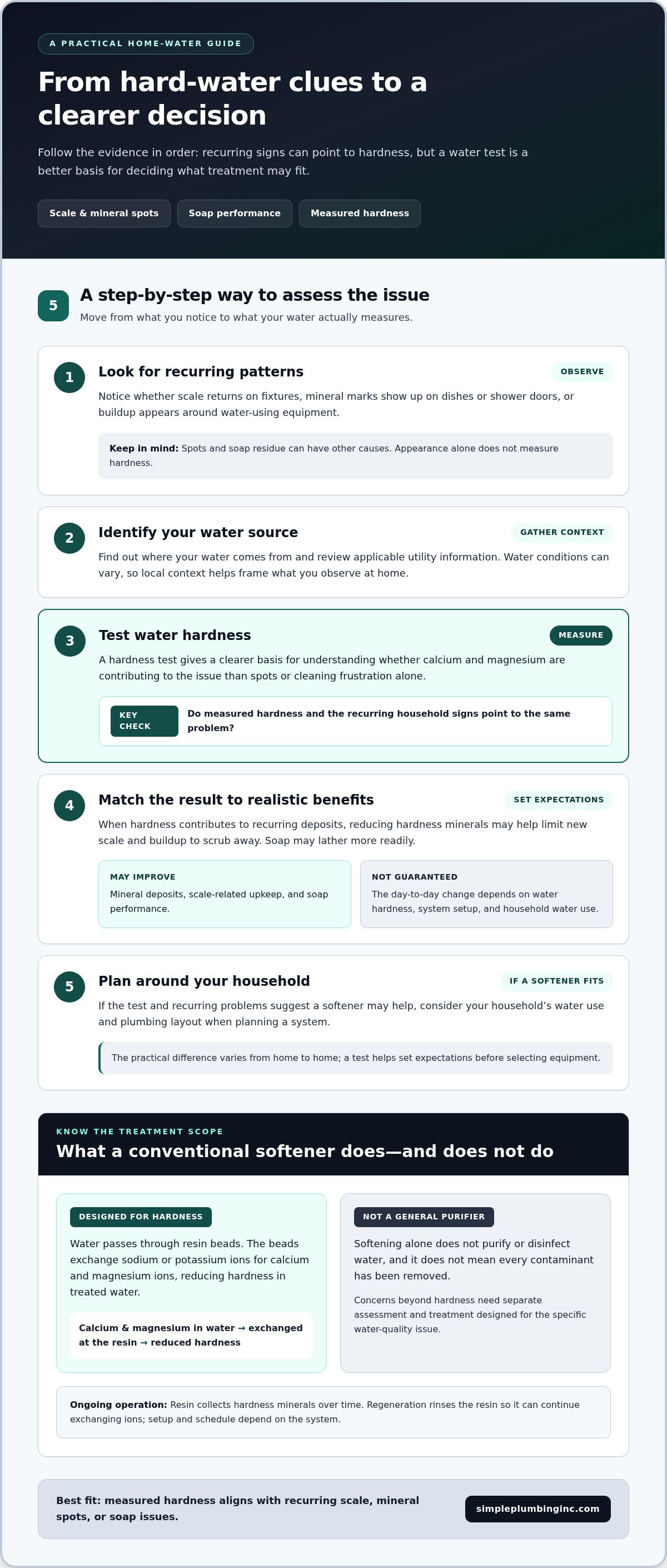
Mineral spots and scale can point to hard water, but they can’t tell you how much hardness is in your tap water. Move from what you notice at home to information about your specific property. This sequence can help:
- Note the symptoms. Record where spots or scale appear and whether they keep returning. Include any soap or cleaning concerns.
- Identify your water supplier. Check your water bill or use the supplier’s service-area lookup with your property address.
- Review the latest available water report. Look for hardness information and confirm that the report applies to your supplier and area.
- Test your water’s hardness. A test gives you a property-specific result to compare with the signs you’ve noticed.
Use local water information without assuming every home is the same
In Yucaipa, service boundaries matter. Confirm which supplier serves your address before relying on its report, since a city name or nearby neighborhood alone may not identify the right utility. Check the report’s date and whether it provides a hardness measurement. Reports may cover other water-quality topics, but those details don’t necessarily show whether hardness is causing scale at your home.
A regional figure can offer context, but it isn’t a test of your individual tap. Water conditions may vary by source and property, so don’t treat an area-wide average as a guaranteed result for your household.
Confirm hardness before deciding on a system
Choose a suitable hardness test and record the result along with the date and the household concerns you’ve observed. The result gives you a clearer basis for deciding whether hardness matches the symptoms. It can also help guide a conversation about whether a softener makes sense and what results to expect.
This step connects the possible benefits of a water softener system to evidence from your home, rather than guesswork. If the test supports addressing hardness, consider how an installed system would fit your household’s needs. Simple Plumbing Inc. installs water softener systems in Yucaipa. Explore water softener installation in Yucaipa as a practical next step.
Considering Water Softener Installation in Yucaipa? Plan a Practical Next Step
Once you’ve identified recurring hard-water concerns, checked the applicable water information, and confirmed hardness with a test, you have a clearer basis for deciding whether installation makes sense. A softener is most relevant when measured hardness matches the scale or mineral buildup you want to address. It isn’t a catch-all fix for every water-quality concern.
Planning matters, too. A system needs to suit how your household uses water and how it can connect with your home’s plumbing. Sharing those details early keeps the discussion focused on your actual needs, not assumed benefits or one-size-fits-all recommendations.
What to expect when planning a water softener installation
Be ready to describe where you see scale or spots, how often they return, and what your hardness test showed. Water-use patterns, the plumbing layout, and the intended installation location also help shape the plan. System selection and installation details depend on the individual home, so consider those factors together rather than choosing equipment based on symptoms alone.
Simple Plumbing Inc. is based in Yucaipa and installs water softener systems for local residential customers. The planning conversation can connect your household observations and water information with the practical needs of installing a system in your home.
Connect hard-water concerns with a straightforward solution
A suitable softener may help reduce mineral scale and make day-to-day fixture cleaning easier when hardness is contributing to the problem. Keep the expected outcome specific: softening addresses hardness minerals, not every possible water concern. Consider how a whole-house water softener installation would fit your home’s water use and plumbing arrangement.
If your test and recurring symptoms point to hardness, you can explore a system that fits your home without assuming every household needs one. Simple Plumbing Inc. provides water softener installation in Yucaipa. Explore water softener installation to take the next practical step.
Make a Water Softener Decision With Confidence
The benefits of a water softener system are most relevant when a hardness test supports what you’re seeing at home, such as recurring scale or mineral spotting. A softener can reduce hardness minerals and may make cleaning easier, but it doesn’t replace filtration for other water-quality concerns.
Start with your household’s symptoms, identify which water supplier serves your property, and confirm hardness before choosing a system. If the results point to a softener, installation planning can account for your water use and plumbing layout. That keeps the decision grounded in your home’s needs.
Simple Plumbing Inc. is a Yucaipa-based plumbing company that installs water softener systems. Veteran-owned and operated by a U.S. Marine Corps veteran, the company can help you move from hard-water concerns to a practical installation plan. Explore water softener installation with Simple Plumbing Inc and take the next step with a clearer understanding of what your home needs.
Frequently Asked Questions
Is a water softener system worth it?
A water softener may be worth considering when confirmed hardness contributes to recurring scale, mineral spots, or difficult cleaning. The benefits of a water softener system are practical, and what you notice depends on your water and household use. A softener isn’t necessary for every home and doesn’t replace filtration for unrelated water concerns. Test hardness first so you can compare the result with your symptoms and set realistic expectations before choosing equipment.
Can a water softener improve skin and hair?
Some people notice that bathing feels different or that soap rinses more easily after hardness minerals are reduced. That’s a personal experience, not proof that a softener treats a skin condition or improves health. Results depend on the water and individual preferences, so comfort may vary. Think of softer-feeling skin or hair as a possible experience, not a promised outcome or a reason to expect medical benefits.
Does a water softener remove contaminants from drinking water?
No. A conventional water softener is designed to reduce hardness minerals, not remove every contaminant or disinfect water. Other treatment technologies address different concerns, and the right approach depends on what is present. Softened water shouldn’t be assumed to be purified or automatically safer to drink. If you have a concern about taste, odor, or another water-quality issue, identify it separately and review relevant water-quality information.
How do I know if my Yucaipa home has hard water?
Scale on fixtures, spots on dishes, and persistent soap residue can suggest hard water, but they don’t measure its level. First identify the water supplier serving your Yucaipa property and review its current information. Then use an appropriate hardness test to assess your tap water. Homes in the area may have different sources or conditions, so don’t rely on an unverified citywide figure as your home’s result.
What happens if I don’t install a water softener?
Nothing automatically happens just because your home doesn’t have a softener. If your water is hard, mineral deposits may continue to build on surfaces and water-using equipment, which can mean more cleaning. The extent depends on the water and household use. First determine whether hardness is present and affecting your home. Then decide whether reducing hardness offers a practical benefit worth pursuing.
How much maintenance does a water softener need?
Maintenance depends on the system, water conditions, and household use. Conventional systems commonly need attention to their salt supply and periodic checks, while other designs have different care needs. Follow the instructions for the installed system instead of assuming one schedule applies to every home. Consider ongoing upkeep as part of your decision, but don’t rely on generic service intervals or cost estimates that may not fit your equipment.


