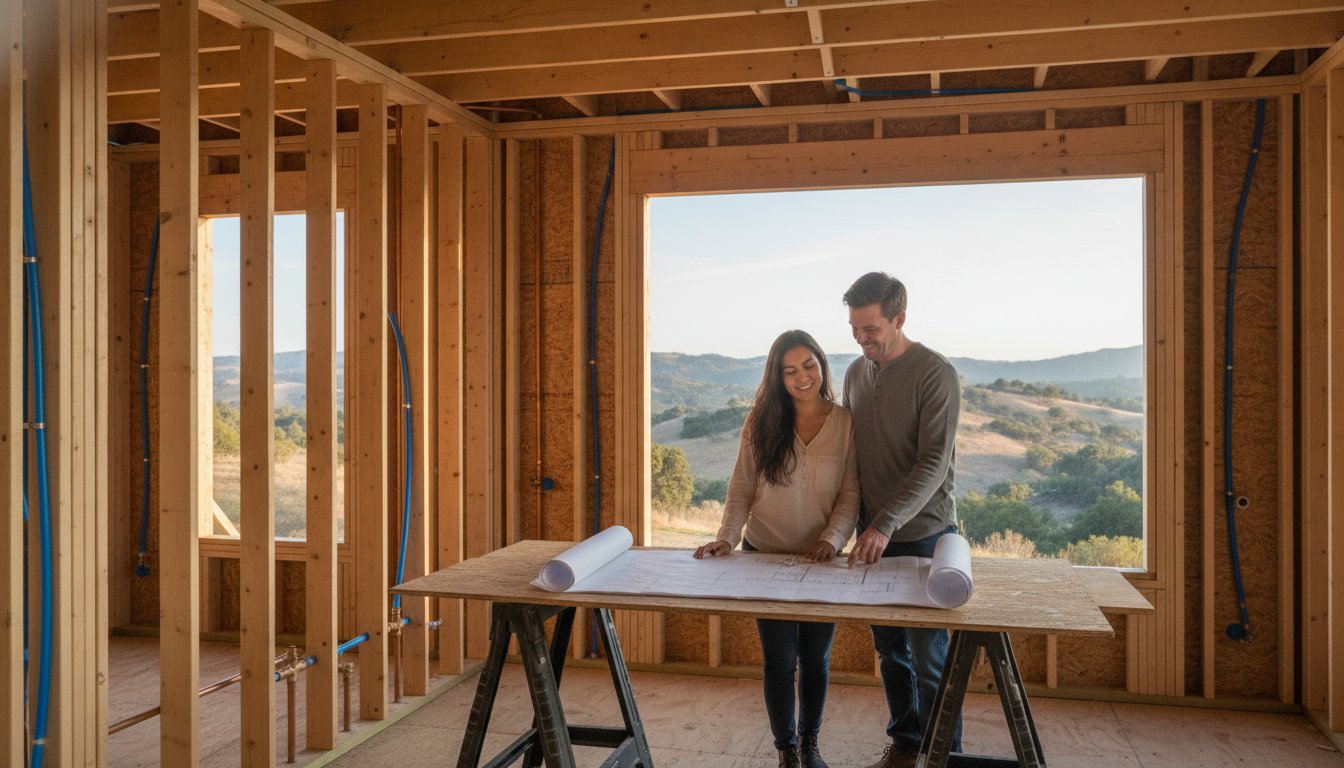
Imagine standing in your new Yucaipa home while it is still just wooden studs and open frames. You look at the maze of pipes and wonder if they will truly stay leak-free ten years from now. It is a common worry, especially when so much of your investment is about to be hidden behind layers of drywall. You deserve a home that is built to last without the constant stress of "what-ifs." This new construction plumbing checklist is designed to give you that peace of mind by breaking down a complex process into clear, manageable steps.
We understand that the technical side of building can feel overwhelming. That is why we have created this guide to help you master every stage of your installation, from the initial underground lines to the final fixture tests. You will learn exactly what to look for during the rough-in phase and how to protect your new appliances from Yucaipa's heavy mineral scale. We will also cover the latest 2025 California Plumbing Code requirements and seismic safety standards, so you know your home is safe, efficient, and fully up to code.
Key Takeaways
- Understand the underground phase to ensure your main water and sewer lines are installed correctly from day one.
- Use this new construction plumbing checklist to track the rough-in stage and catch potential issues before the drywall hides them.
- Learn the essential steps for the finish phase to ensure every sink, toilet, and appliance is connected securely.
- Gain the expertise to verify that the final installation matches your blueprints and maintains consistent water pressure.
- Discover how to protect your new pipes and appliances from Yucaipa’s hard water by planning for a water softener early.
The Underground Phase: Securing the Foundation
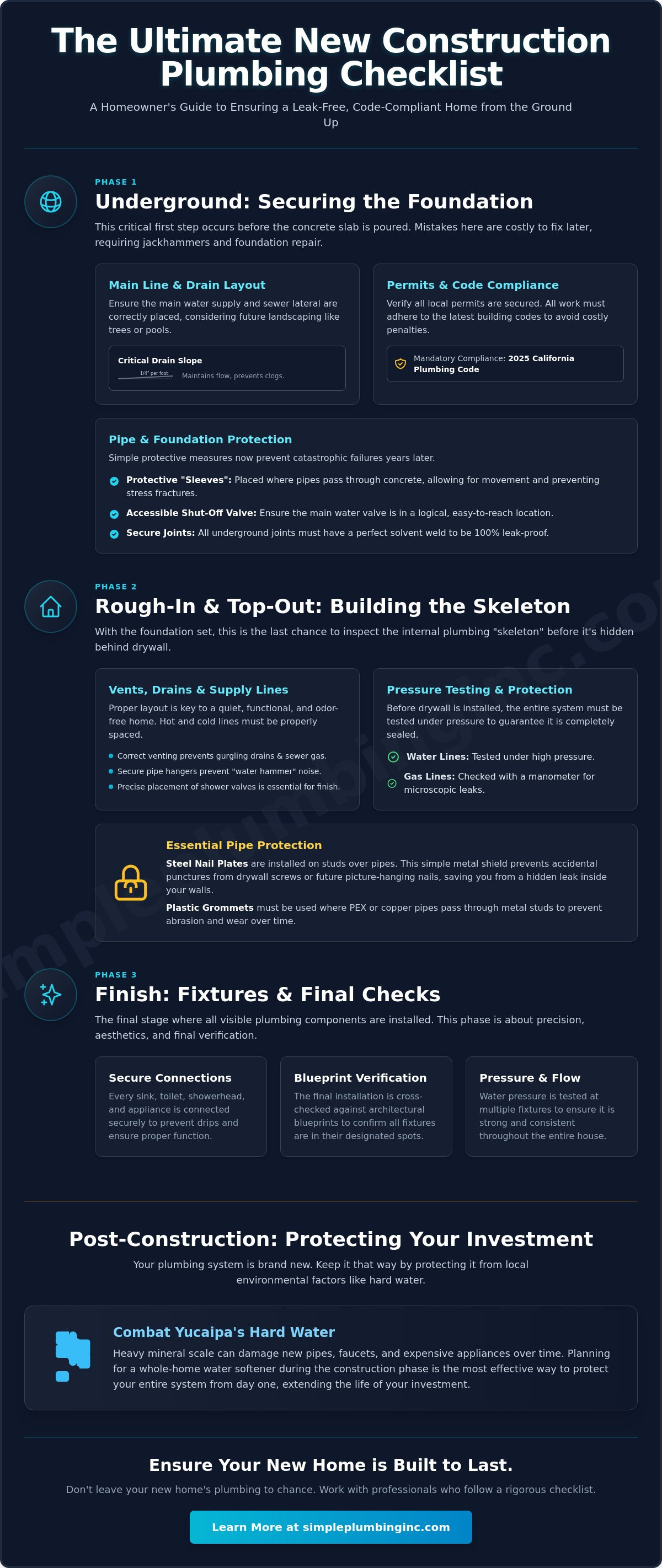
The first step in any professional installation of plumbing systems happens before the concrete is even poured. This phase is critical because once the slab is down, reaching these pipes requires a jackhammer and a massive budget. You want to ensure every line is protected from the weight of the house and the natural shifting of Yucaipa's soil. Getting it right today prevents the nightmare of a foundation leak ten years from now.
During this stage, your new construction plumbing checklist should focus on what lies beneath. This includes the installation of the main water supply line and the primary sewer lateral. We also look for "sleeves," which are protective tubes placed around pipes where they pass through the concrete. These allow for slight movement and thermal expansion, preventing the pipes from snapping if the ground settles. It is a simple step that saves your foundation from unnecessary stress.
Permits and Site Preparation
Before a single shovel hits the dirt, verify that all local Yucaipa building permits are in hand. As of January 1, 2026, all new construction must comply with the 2025 California Plumbing Code. The city updated its fee schedule in early 2026, and skipping a permit can result in penalties that double your original costs. Ensure your plumber has reviewed the specific architectural blueprints to confirm the pipe layout matches the physical site. The ground must be graded correctly to prevent water from pooling near the foundation, and all utility lines should be clearly marked to avoid accidental damage during excavation.
Main Line and Drain Layout
Accuracy is everything when laying out drains. You must verify that the sewer line maintains a minimum 1/4-inch per foot slope. If the angle is too shallow, waste will linger and cause frequent clogs. If it is too steep, liquids will outrun solids, leading to the same problem. Check that the main water shut-off valve is placed in an accessible location rather than tucked away in a corner that will eventually be blocked by a water heater or storage. Finally, inspect all underground joints for secure solvent welding. A tight seal now is the only way to ensure your new construction plumbing checklist delivers a leak-free home. Consider where these lines sit in relation to your future yard; you don't want your main sewer line running directly under where you plan to plant a large oak tree or dig a swimming pool.
Rough-In and Top-Out: Building the Plumbing Skeleton
Once the foundation is set, your home enters the "rough-in" stage. This is when the house gets its internal skeleton. You will see vertical vent stacks rising through the roof and horizontal branch lines snaking through the floors. A solid new construction plumbing checklist ensures these lines are secured tightly with the right hangers. If they are loose, you will eventually hear "water hammer," which is that annoying banging sound that happens when you turn off a faucet. We anchor every pipe to keep your home quiet and stable.
This is also the time to set shower valves and tub drains. Since these are built into the wall or floor, their placement must be perfect. If a valve is even an inch off, your shower handle won't sit flush against the finished tile later. We also map out gas line routing for your kitchen stove and laundry dryer during this phase. Every pipe and connection must follow the International Residential Code to ensure the entire system is safe and efficient for your family. If you want to ensure your build meets these high standards, our team provides expert new construction plumbing services to keep your project on schedule.
While we focus on your home's water systems, don't forget the importance of a properly installed HVAC system during the rough-in stage; to ensure your climate control is as reliable as your pipes, check out Nice and Cool Inc..
Supply Lines and Venting
Proper venting is the secret to a home that doesn't have "stinky" or slow drains. Without enough air in the system, your drains will gurgle and traps can dry out, letting sewer gas into the house. We also check the spacing between hot and cold water lines. If they're too close together, the cold water can get lukewarm before it hits the tap. If your builder is using PEX or copper through metal studs, we verify that plastic grommets are used. These prevent the sharp metal from rubbing through the pipe over time as it expands and contracts.
Pressure Testing and Protection
Before the drywall goes up and hides everything, we test every inch of the system. We use a tool called a manometer to check gas lines for even the tiniest microscopic leaks. We also put the water lines under high pressure to ensure every joint is solid and leak-free. One of the most important steps on our new construction plumbing checklist is the installation of steel "nail plates" on the wooden studs. These plates act as a shield. They stop a drywall screw or a picture-hanging nail from puncturing a pipe months after you move in. It's a simple, inexpensive step that prevents a massive headache down the road.
The Finish Phase: Fixtures and Trim-Out
The finish phase is when your house finally feels like a home. This is the "trim-out" stage where we install the fixtures you will use every day. It is more than just making things look pretty. It is about ensuring every connection is watertight and every appliance is ready for years of service. A vital part of our new construction plumbing checklist is the total system flush. During construction, sawdust, dirt, and even small pieces of copper can end up inside your pipes. If we don't clear these out before you move in, that debris will clog your faucet aerators and damage the sensitive valves in your dishwasher.
We also focus on the details that prevent long-term moisture damage. This includes sealing the "escutcheons," which are the metal trim plates where pipes come out of the wall. If these aren't sealed, steam from a shower or a small splash under the sink can seep into the wall cavity. Over time, that leads to mold or rot that you won't see until it is a major problem. We take the time to seal these plates properly because we want your home to stay as dry as the day it was built.
Setting Fixtures and Appliances
When we set your toilets, we check that they are perfectly level. A wobbly toilet isn't just annoying; it puts constant stress on the wax ring seal. If that seal breaks, you will have a slow leak that ruins your subfloor. We also verify that your faucets have a full range of motion. They should move smoothly without any drips at the base or the handles. For your laundry room and kitchen, we connect all major appliances, ensuring the dishwasher drain is high-looped to prevent backflow. In California, safety is a top priority. Whether it is a brand-new install or a water heater replacement Yucaipa homeowners might need later, the unit must meet strict seismic bracing codes. We secure these units with heavy-duty straps to ensure they stay upright during an earthquake.
Final Connection Checks
The area under your sinks is a common spot for hidden leaks. We inspect every "P-trap" to ensure the seals are tight and the joints are properly aligned. We also run the garbage disposal to check for excessive vibration. A disposal that shakes too much can loosen other plumbing connections over time. Finally, we check the water heater temperature. We usually set it to 120 degrees Fahrenheit. This is hot enough for comfort but safe enough to prevent scalding. It is also the most energy-efficient setting for your monthly bills. Following this new construction plumbing checklist during the finish phase ensures your home is safe, dry, and ready for your family to move in.
Plumbing Inspection Checklist: What Homeowners Should Verify
Your builder will have their own inspectors, but you should still perform your own walk-through. A new construction plumbing checklist helps you spot small errors before they become permanent fixtures in your home. Start by comparing the final installation against the original plumbing blueprints. It's surprisingly common for a sink or drain to be shifted a few inches during construction, which can ruin your plans for custom cabinetry later. You should also check for consistent water pressure at the highest point in the house. If the shower on the second floor feels weak, there might be a restriction in the line or a sizing issue that needs to be addressed immediately.
Keep an eye out for "slow drains" during your inspection. If a sink takes a few seconds too long to empty, it often means construction debris like drywall mud or sawdust is sitting in the pipes. You also need to verify that every gas shut-off valve is easily accessible and clearly labeled. In an emergency, you don't want to be hunting for a valve behind a heavy appliance. Finally, confirm your plumber provided a written warranty for their labor. A handshake isn't enough when it comes to the complex systems behind your walls.
Independent Phase Inspections
Many homeowners hire an independent plumber to review the work before the drywall goes up. This provides a neutral set of eyes to catch mistakes that a busy city inspector might overlook. While a city inspector ensures the home is safe, their standards might not match your expectations for craftsmanship. It is important to remember that the building code is the minimum legal standard, not the gold standard for quality. If you want a truly professional evaluation of your home's pipes, our team can perform thorough leak detection and system reviews to ensure everything is perfect.
Common Punchlist Red Flags
During your final walk-through, look for wet spots on the subfloor or near the base of the plumbing stacks. Even a tiny damp patch can indicate a slow leak that will lead to mold. Listen for knocking sounds, known as water hammer, when you turn faucets off abruptly. This usually means a pipe isn't secured properly inside the wall. You should also check for mismatched finishes on your faucets or visible tool marks on your fixtures. If a brand-new showerhead is scratched or the finish is peeling, it should be replaced before you sign off on the job. These details might seem small, but they are indicators of how much care was taken during the entire build.
Post-Construction: Protecting Your New Investment
Moving into your new home is a major milestone, but the work of protecting your investment is just beginning. Even the best-built systems require ongoing care to stay in top shape. Your new construction plumbing checklist should include a plan for the first six months of residency. During this time, the house will settle, and small amounts of construction debris that were missed during the initial flush may migrate through your pipes. Planning for a professional drain cleaning shortly after move-in is a smart way to clear out any "settling" sediment before it causes a backup.
It is also the perfect time to establish a relationship with a dependable, veteran-owned local plumber. Having a "straight shooter" you can call for advice or routine service provides long-term peace of mind. We recommend keeping a dedicated folder or digital log of all your shut-off valve locations, appliance warranties, and service records. Professional service teams often utilize platforms like Repair-CRM to manage these records and digitize their business operations. This organization makes it much easier to handle any future maintenance without the stress of searching for basic information during a minor emergency.
Addressing Yucaipa’s Hard Water
Yucaipa is well-known for having high mineral content in its municipal water supply. These minerals are tough on your plumbing. Hard water can shorten the life of a brand-new water heater by as much as 50% because of scale buildup on the heating elements. To protect your appliances, we strongly suggest installing a water softener during the build or immediately after moving in. Most modern homes in our area are designed with a specific "softener loop" in the garage for easy installation. Beyond saving your water heater, soft water keeps your new faucets and showerheads looking pristine by preventing those stubborn white crusty spots from forming on your finishes.
Establishing a Maintenance Schedule
Consistency is the key to a leak-free home. You should schedule an annual water heater flush to remove any sediment that collects at the bottom of the tank. This simple task keeps the unit running efficiently and prevents the tank from corroding prematurely. We also suggest a post-move-in wellness check. Our team at Simple Plumbing Inc can walk through your home with you to verify that everything is performing as expected now that the system is under daily use. Following through on this final stage of your new construction plumbing checklist ensures your home remains the safe, comfortable sanctuary you worked so hard to build.
Ensure Your New Home Is Built to Last
Building a home is a journey of a thousand details. Your plumbing system is one of the most important because it lives behind the walls and under the concrete slab. By following this new construction plumbing checklist, you've taken a major step toward preventing hidden leaks and ensuring your fixtures last for decades. You now know how to monitor everything from the initial pipe slope to the final system flush and seismic bracing.
You don't have to manage these technical details alone. You deserve a plumbing partner who provides honest answers and reliable results. We're a veteran-owned and operated team that specializes in Yucaipa new construction. We believe in transparent, no-fluff pricing so you always know exactly where your project stands. Our goal is to make the complex parts of your build feel manageable and stress-free.
Get expert new construction plumbing guidance from Simple Plumbing Inc today. We look forward to helping you move into your new Yucaipa home with total confidence.
Frequently Asked Questions
What is a plumbing rough-in for a new home?
A plumbing rough-in is the stage where all the main supply and drain lines are installed inside the wooden frame of your home. This happens after the foundation is set but before the drywall is hung. During this phase, we place shower valves and toilet flanges exactly where they need to be. It is the most important part of the new construction plumbing checklist because it's your last chance to see the pipes before they're hidden.
How long does plumbing installation take in a new construction project?
Plumbing installation typically occurs in three distinct phases, each taking about three to five days for a standard single-family home. The underground phase happens first, followed by the rough-in after framing, and finally the trim-out once the walls are finished. While the actual work happens quickly, the total timeline depends on the overall construction schedule and when the city can perform its mandatory inspections.
Does a new construction home need a professional plumbing inspection?
Yes, your home will undergo mandatory city inspections, but hiring an independent expert for a quality check is highly recommended. City inspectors only verify that the work meets the 2025 California Plumbing Code, which is the bare legal minimum. An independent inspection focuses on craftsmanship, ensuring that pipes are quiet and fixtures are perfectly level. This extra step gives you peace of mind that your investment is truly protected.
What is the most common plumbing problem in new builds?
The most common issues in new builds are construction debris in the lines and "water hammer" from poorly secured pipes. Sawdust or drywall mud can easily fall into open drains during construction, leading to slow drains immediately after you move in. Additionally, if a plumber skips using enough hangers, you'll hear a loud banging sound every time you turn off a faucet. We prioritize flushing the system and securing every line to avoid these nuisances.
Should I install a water softener in my new Yucaipa home?
You should definitely install a water softener because Yucaipa is known for its hard water. The high mineral content in our local municipal supply will cause scale buildup inside your brand-new pipes and water heater. Without a softener, your appliances might only last half as long as they should. Most new homes in our area include a pre-plumbed loop in the garage, making it a straightforward addition during the build.
Can I change the plumbing layout after the foundation is poured?
Changing the layout after the foundation is poured is possible, but it's extremely expensive and time-consuming. Because the main drain lines are buried under several inches of concrete, we'd need to use a jackhammer to reach them. This can also compromise the integrity of your new slab. It's much better to finalize your blueprints and double-check the pipe locations during the underground phase before the pour.
What kind of pipes are best for new construction in Southern California?
PEX and PVC are the most common choices for new homes in Southern California today. PEX is flexible, which makes it resistant to scale buildup and easier to install in tight spaces. For drainage, PVC is the standard because it's durable and cost-effective. While copper is still a high-quality option, many homeowners prefer PEX because it doesn't corrode and handles Yucaipa's mineral-heavy water quite well.
How do I find a reliable new construction plumber in Yucaipa?
Finding a reliable plumber starts with looking for local expertise and transparent, no-fluff pricing. You want a team that understands Yucaipa’s specific building codes and water conditions. Look for a veteran-owned company that prioritizes honesty and clear communication. A good plumber will be happy to walk you through their new construction plumbing checklist and explain every step of the process so you feel confident in the quality of your new home.


